
For years, the idea of resin flooring conjured images of sterile warehouses or clinical laboratories, yet it’s now the most sought-after foundation for the modern, high-end home. You likely want the visual purity of a poured floor but worry about the practicalities of living with it. Perhaps you fear hairline cracks, the lingering scent of harsh chemicals, or a finish that feels too industrial for a comfortable living room.
It’s a valid concern, as the difference between a functional utility floor and a luxury interior lies entirely in the expertise of your contractor. By partnering with domestic resin flooring specialists, you can achieve a bespoke, seamless interior that balances uncompromising aesthetics with sustainable, family-friendly performance. We understand that a home requires a different touch than a factory, focusing on indoor air quality and tactile warmth.
In this guide, we’ll discover how professional resin flooring transforms residential spaces with sustainable, high-performance finishes. You’ll learn about the benefits of low-emission, plant-based formulations and why these systems are the ideal partner for underfloor heating. We’ll also explore how to ensure your new surface remains perfectly seamless and easy to clean for decades to come.
Key Takeaways
- Learn why domestic resin flooring specialists are essential for achieving a bespoke, high-end finish that prioritises residential aesthetics over industrial utility.
- Discover how the non-porous, seamless nature of resin provides superior hygiene and works in perfect harmony with modern underfloor heating systems.
- Understand the environmental benefits of sustainable resin, featuring bio-based formulations with up to 85% renewable content for improved indoor air quality.
- Explore the selection framework between polyurethane and epoxy resins to identify the ideal durability and sheen for your specific living environment.
- Gain insight into the meticulous professional installation process, highlighting why expert subfloor preparation is the foundation of a flawless, long-lasting floor.
What Defines Domestic Resin Flooring Specialists?
Choosing the right surface for your home involves more than just selecting a colour. It requires a partner who understands that a kitchen isn’t a factory floor. Domestic resin flooring specialists bridge the gap between industrial-grade durability and the refined elegance expected in modern British interiors. Whilst industrial installers focus on speed and chemical resistance, a residential specialist prioritises the tactile experience, aesthetic precision, and long-term comfort of the homeowner. For those who require high-performance solutions in a commercial setting, you can learn more about StripeGuys Warhouse Line Striping and their industrial floor marking expertise.
Traditional luxury materials like stone, marble, or solid wood have long been the standard for premium homes. However, these materials often come with inherent weaknesses, such as porous surfaces that stain or joints that harbour dirt. Resin is accessibility replacing these options because it offers a completely non-porous, unified finish that’s both hygienic and visually striking. Domestic resin flooring specialists are trained to assess the specific moisture levels and structural integrity of residential subfloors, which differ significantly from the heavy-duty concrete slabs found in commercial settings. This expertise ensures the final finish won’t crack or peel under the typical stresses of a family home. For facilities requiring the same level of technical rigour in demanding environments, working with experienced industrial resin flooring contractors ensures compliance with HSE standards and long-term surface performance.
The Aesthetic Advantage of Seamless Surfaces
The absence of grout lines creates an uninterrupted visual plane that traditional tiling simply cannot match. This sense of “flow” is particularly effective in open-plan layouts, where a single surface can unify a kitchen, dining area, and lounge without awkward transitions. By removing the visual noise of joints, even smaller rooms appear more expansive and calmer. Specialists can customise these surfaces with bespoke colours and finishes, from muted earth tones to sophisticated satins, ensuring the floor complements your specific interior design palette rather than dictating it.
Technical Performance in a Residential Context
Unlike the rigid systems used in car parks, residential resin is often formulated for flexibility and warmth. Whilst industrial-grade epoxy resin is renowned for its hardness, domestic applications often favour polyurethane systems. These provide a degree of “give” that aids acoustic dampening, reducing the echo often associated with hard flooring. This flexibility also makes the surface much more comfortable to walk on in bare feet.
Beyond comfort, UV stability is another critical factor for the home. Sun-drenched rooms with large bifold doors or skylights require light-stable resins to prevent the surface from yellowing over time. A specialist will select high-performance, aliphatic coatings that maintain their original clarity and depth of colour for years. They also ensure the system is fully compatible with underfloor heating, allowing the heat to radiate efficiently through the floor without risking the integrity of the bond.
Performance Benefits: Why Resin Wins for Modern Homes
Modern homes demand surfaces that can withstand the chaotic energy of family life without sacrificing an ounce of style. Unlike traditional floor coverings that rely on joints or adhesives, resin provides a continuous, non-porous surface that’s impervious to liquid and bacteria. This level of hygiene is vital in kitchens and hallways, where spills and outdoor debris are common. Because there’s nowhere for microbes to hide, the floor remains inherently cleaner than tile or timber alternatives. Homeowners who want to explore this further will find our guide to modern seamless kitchen flooring an invaluable resource for understanding how resin transforms the most demanding room in the home.
Safety remains a paramount concern, especially in moisture-prone areas like bathrooms or utility rooms. By working with domestic resin flooring specialists, homeowners can specify precise slip-resistance levels tailored to their needs. For instance, achieving a Pendulum Test Value (PTV) of 36 or above ensures a low slip potential even in wet conditions. This provides essential peace of mind for families with young children or elderly relatives, all whilst maintaining a sleek, high-end aesthetic.
Integration with Underfloor Heating Systems
Resin is an exceptional conductor of heat, allowing your underfloor heating system to reach the desired temperature more quickly than it would through timber or thick stone. This efficiency doesn’t just improve comfort; it can also lead to reduced energy consumption over time. Polyurethane resins possess a molecular structure that allows them to expand and contract in perfect harmony with the fluctuating temperatures of underfloor heating systems. This flexibility is what prevents the surface from cracking or delaminating as the subfloor warms and cools. When planning a renovation, consulting with domestic resin flooring specialists ensures you choose a system tailored to your home’s unique thermal requirements.
Low Maintenance and Effortless Cleaning
One of the most liberating aspects of a resin floor is the total elimination of grout lines. You’ll no longer need to scrub discoloured joints with harsh, acidic cleaners that can damage your health and the environment. For pet owners, the non-porous finish is a revelation; it doesn’t trap odours or dander, and accidents can be wiped away with nothing more than a damp microfibre mop. To maintain the luxury lustre of your floor, follow these simple steps:
- Regularly remove dust and grit with a soft-bristled broom or vacuum.
- Mop with a pH-neutral detergent to preserve the protective topcoat.
- Use felt pads on furniture legs to prevent superficial scratching.
This low-intervention approach ensures the surface remains as vibrant as the day it was installed. A professionally applied domestic resin floor can last between 10 and 20 years, making it a sustainable investment for the long-term future of your home.
Sustainability and Indoor Air Quality: The Eco-Conscious Choice
Modern interior design has evolved beyond simple aesthetics. Today’s homeowners prioritise the environmental impact of their material choices as much as the visual outcome. Domestic resin flooring specialists are leading this shift by moving away from traditional petrochemical-based systems toward innovative, bio-based alternatives. These advanced formulations can contain up to 85% renewable, plant-based materials, significantly reducing the carbon footprint of a home renovation without compromising the floor’s structural integrity or life expectancy.
Choosing a sustainable surface doesn’t mean sacrificing the premium look or durability of your interior. In fact, these eco-friendly systems often outperform standard synthetics in residential settings because they are designed with the home environment in mind. By selecting a specialist who understands the lifecycle of their materials, you ensure that your luxury interior is built on a foundation of environmental responsibility and long-term performance.
Plant-Based Formulations and Renewable Content
The bio-based revolution in resin flooring is driven by the replacement of synthetic components with vegetable-based polyols, often derived from castor oil or other sustainable crops. These natural materials offer a molecular bond that is just as robust as standard synthetic options, providing the same high-performance finish you expect from a premium interior. In the context of flooring, Cradle to Cradle certification is a globally recognised standard that assesses products for their safety to humans and the environment, ensuring materials are designed for a circular economy. By selecting these certified systems, you’re investing in a surface that respects the planet’s resources whilst delivering a bespoke, luxury finish. To understand how these plant-based biopolymers are redefining premium interiors, our in-depth guide to bio based resin floor installation explores the technical reality and long-term benefits of these sustainable systems.
Protecting Family Health with VOC-Free Solutions
Indoor air quality is a frequent concern for families, particularly when introducing new materials into the home. Volatile Organic Compounds (VOCs) are chemicals that can “off-gas” from traditional building products, often resulting in a sharp, chemical smell that lingers for weeks. These compounds can exacerbate respiratory issues and contribute to poor health over time. Choosing domestic resin flooring specialists who utilise EMICODE EC1 PLUS® certified products is the most effective way to mitigate this risk.
This certification represents the industry’s highest standard for low emissions, ensuring that your new floor is safe for everyone, including asthma and allergy sufferers. Because the resin is applied as a liquid and cures into a solid, inert mass, it doesn’t trap dust, dander, or pollen like carpets do. This creates a much healthier living environment, combining the hygiene benefits of a seamless surface with the peace of mind that comes from superior air quality standards. This commitment to health transforms a simple flooring upgrade into a meaningful improvement in your daily living conditions.
Choosing the Right Finish: A Selection Framework
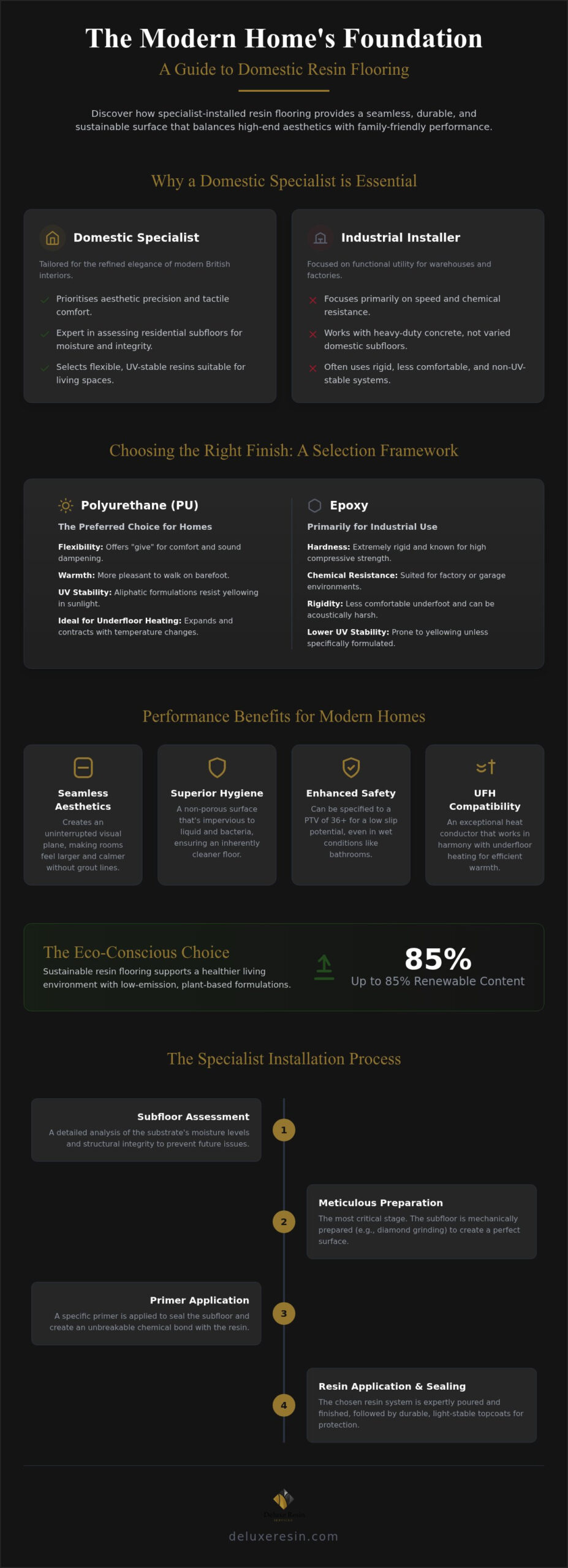
Selecting the perfect finish is a collaborative process between the homeowner and their domestic resin flooring specialists. It involves more than just picking a favourite shade; it requires matching the material’s chemical properties to the specific demands of your lifestyle. Whilst epoxy systems are renowned for their hardness and are excellent for garages or utility spaces, most luxury living areas benefit from the superior characteristics of polyurethane. Understanding this distinction is the first step in ensuring your investment stands the test of time. The same principle applies at a larger scale, where industrial resin flooring contractors must carefully navigate the choice between epoxy and polyurethane systems to meet the rigorous demands of commercial and manufacturing facilities.
You must also consider the sheen level and how it interacts with your home’s lighting. High-gloss finishes create a striking, mirror-like effect that can make a bold architectural statement, though they may require more frequent buffing to maintain their clarity. The prevailing trend for 2026 leans towards matt and satin finishes. These provide a contemporary, sophisticated look that is remarkably forgiving in high-traffic family zones, as they naturally mask minor surface scratches and dust. For areas where safety is the primary concern, decorative quartz or fine aggregates can be broadcast into the resin to enhance slip resistance without sacrificing the floor’s elegant appearance.
Polyurethane: The Premier Choice for Home Comfort
Polyurethane is widely considered the gold standard for residential interiors due to its inherent elastic properties. This natural flexibility allows the floor to bridge minor movements in the subfloor, which effectively prevents the stress cracks that can occur with more rigid materials. This elasticity also provides significant acoustic advantages; it absorbs the energy of footsteps and falling objects, reducing the “clatter” often associated with hard surfaces in open-plan homes. Because polyurethane is exceptionally UV-stable, it protects your chosen colour from the yellowing effects of sunlight, ensuring that light greys and crisp whites remain vibrant for years.
Visual Customisation: From Minimalist Grey to Bold Colours
The design possibilities are virtually limitless thanks to the RAL colour system, which allows you to coordinate your floor with specific architectural elements or furniture pieces. If you’re designing a room with limited natural light, a light-reflective satin finish can help bounce brightness deeper into the space, making the environment feel more expansive. Safety is integrated into the design through carefully calibrated R-ratings. Specialists can adjust the surface texture to achieve an R10 rating for kitchens or a more robust R12 for bathrooms and wet rooms, providing a secure footing in every corner of the home.
To explore our full range of bespoke finishes and receive expert guidance on the best system for your project, contact our domestic resin flooring specialists today.
The Specialist Installation Process: Quality from the Ground Up
The success of a luxury interior depends on more than just the top layer. It relies on what happens before the resin is even mixed. Professional installation is critical because residential subfloors often have complexities that industrial slabs don’t. Domestic resin flooring specialists take a methodical approach to ensure the surface remains perfectly seamless for decades. Attempting a DIY approach or hiring a general contractor often leads to failures like bubbling or delamination, which are expensive to rectify. Expert installers bring the precision required for a flawless finish.
Moisture testing is a vital stage, particularly in older UK properties or new builds where the screed hasn’t fully dried. Because moisture is a primary cause of resin failure, specialists use calibrated equipment to check the Relative Humidity (RH) levels. If levels are too high, a dedicated moisture-tolerant primer or damp-proof membrane is installed to protect the system. This technical foresight prevents future issues and ensures the longevity of your investment.
Meticulous Surface Preparation
Preparation starts with diamond grinding or vacuum-blasting to remove any surface contaminants and open the pores of the substrate. This creates the essential mechanical bond needed for the resin to adhere permanently. It’s a vital step. Specialists carefully address any existing cracks in the screed, using high-strength reinforcement to prevent these imperfections from telegraphing through the final finish. Following this, a high-quality primer is applied. This step seals the subfloor and prevents air from escaping, which would otherwise cause unsightly pinholing or bubbles in the decorative layers.
What to Expect During the Installation Week
A typical project follows a structured timeline to allow for precise application and curing. This steady rhythm ensures every layer bonds correctly. Whilst every home is different, a standard installation usually adheres to the following schedule:
- Day 1: Mechanical preparation of the subfloor and initial repairs to the substrate.
- Day 2: Application of the primer and any necessary base coats to level the surface.
- Day 3: Installation of the main decorative resin layer.
- Day 4: Application of the final protective topcoat in your chosen matt, satin, or gloss finish.
- Day 5: Final inspection and site clearance.
Curing times are essential for long-term durability. Whilst you can usually walk on the floor in socks after 24 hours, it takes about seven days for the resin to achieve a full chemical cure. During this period, it’s best to avoid heavy furniture or cleaning with water. This methodical process, managed by domestic resin flooring specialists, ensures your floor performs as beautifully as it looks. Enquire about your bespoke resin floor installation with Deluxe Resin Services to transform your home with a professional, high-performance finish.
Elevating Your Home with Sustainable Luxury
Investing in a resin floor is about more than just a surface; it’s a commitment to a cleaner, more sustainable, and visually stunning home environment. By choosing domestic resin flooring specialists, you ensure that your interior benefits from a bespoke finish that balances industrial-grade durability with refined residential comfort. You don’t have to choose between style and safety when you opt for non-slip, low-emission systems that integrate perfectly with modern underfloor heating.
Our national UK coverage for residential and commercial projects provides access to premium formulations containing up to 85% renewable materials. This commitment to environmental responsibility protects the planet whilst ensuring your family’s health isn’t compromised by harsh chemicals. With EMICODE EC1 PLUS® certification, you can rest assured that your indoor air quality remains a priority. From meticulous subfloor preparation to the final bespoke topcoat, the right expertise turns a technical solution into a design masterpiece.
Request a professional consultation for your domestic resin project and take the first step toward a flawless, high-performance interior that truly lasts.
Frequently Asked Questions
Is domestic resin flooring suitable for use with underfloor heating?
Yes, resin flooring is an exceptional partner for underfloor heating due to its high thermal conductivity. Unlike thicker materials that act as insulators, resin allows heat to transfer quickly into the living space, improving energy efficiency. Polyurethane systems are particularly favoured by domestic resin flooring specialists because their natural elasticity allows the floor to expand and contract safely as temperatures fluctuate, preventing the surface from cracking or delaminating over time.
How long does a domestic resin floor typically last?
A professionally installed domestic resin floor typically has a lifespan of between 10 and 20 years. The exact longevity depends on the volume of foot traffic and how well the surface is maintained. Because the material is incredibly durable and resistant to impact, it withstands the daily rigours of family life effectively. Following a simple cleaning routine and using felt pads on furniture legs will ensure the luxury finish remains vibrant for decades.
Are resin floors slippery when wet, especially in bathrooms?
Resin floors are not inherently slippery and can be customised to meet specific safety requirements. While high-gloss finishes are smooth, specialists can incorporate fine aggregates or transparent textures into the topcoat to enhance grip. For moisture-prone areas like bathrooms and utility rooms, we recommend a Pendulum Test Value (PTV) of 36 or higher. This ensures a low slip potential even in wet conditions, balancing a sleek aesthetic with essential family safety.
How much does domestic resin flooring cost per square metre in the UK?
The cost of installing resin flooring depends on several variables, including the total area size, the condition of the existing subfloor, and the specific resin system chosen. Because every project is bespoke, prices are influenced by the level of surface preparation required, such as diamond grinding or moisture priming. Generally, larger open-plan areas offer better value per square metre than smaller, complex rooms. We recommend a professional site survey to receive an accurate, tailored quote.
Can resin flooring be installed over existing tiles or wood?
It’s possible to install resin over existing substrates like tiles or wood, provided they are structurally sound and correctly prepared. For tiles, the surface must be diamond ground to remove glazes and ensure a mechanical bond. Timber subfloors require specific reinforcement to prevent movement that could cause the resin to crack. Specialists will always assess the stability and moisture content of your current floor before confirming if an overlay is viable for your specific project.
How do I clean and maintain my new resin floor?
Cleaning a resin floor is effortless thanks to its non-porous, seamless nature. For daily maintenance, a soft broom or vacuum removes grit that could cause superficial scratches. For deeper cleans, use a damp microfibre mop with a pH-neutral detergent. You should avoid using bleach, scouring pads, or steam mops, as these can dull the protective topcoat over time. This simple approach preserves the floor’s lustre without the need for harsh chemicals or specialised grout cleaners.
Does resin flooring have a strong chemical smell during installation?
Modern residential systems don’t produce the overwhelming chemical odours associated with older industrial resins. By utilising formulations with up to 85% plant-based materials and EMICODE EC1 PLUS certification, domestic resin flooring specialists ensure that VOC emissions are kept to an absolute minimum. While a faint scent may be present during the liquid application, it dissipates rapidly as the resin cures. This makes the installation process safe and comfortable for families and those with respiratory sensitivities.
What is the difference between resin-bound and resin-bonded surfaces?
The primary difference involves how the aggregate and resin are combined. In a resin-bound system, the stones and resin are mixed together before being laid, creating a smooth, permeable surface that allows water to drain through. Conversely, resin-bonded systems involve scattering loose aggregate over a layer of wet resin, resulting in a textured, impermeable finish. Whilst bound systems are popular for driveways, seamless poured resins are the standard choice for luxury indoor living spaces.