
What if the most resilient surface in your home wasn’t stone or timber, but a liquid-poured floor that’s as sustainable as it is visually striking? You likely appreciate the minimalist, seamless aesthetic of a premium finish, yet it’s common to hesitate when considering the technical realities of a British renovation. You might worry whether a poured surface will crack over your underfloor heating or if the installation process will compromise your indoor air quality with harsh chemical scents.
Understanding the resin flooring pros and cons UK homeowners encounter is essential to making a confident investment. This guide demystifies the functional differences between epoxy and polyurethane systems whilst addressing your concerns regarding VOCs and long-term durability. By exploring modern, bio-based solutions, you’ll discover how to achieve a hygienic, easy-clean floor that perfectly aligns with your environmental values and your home’s sophisticated style.
Key Takeaways
- Learn how a seamless resin finish creates a premium, expansive feel in domestic spaces whilst eliminating the bacteria-prone grout lines found in traditional tiling.
- Understand the essential resin flooring pros and cons UK homeowners should evaluate, from the initial investment in craftsmanship to the long-term durability of professional installation.
- Discover why modern polyurethane resin is an ideal partner for underfloor heating systems, offering the thermal efficiency and flexibility needed to prevent surface cracking.
- Evaluate how sustainable, plant-based resin solutions compare to alternatives like polished concrete, ensuring your choice supports both indoor air quality and luxury design.
The Advantages of Modern Resin Flooring in UK Homes
Choosing a floor finish involves balancing visual impact with functional longevity. Seamless polymer flooring offers an unrivalled aesthetic that traditional tiles or timber simply can’t match. By removing the visual interruptions of joints, these surfaces create a sense of expansive space, making even modest rooms feel grander. When weighing up resin flooring pros and cons UK homeowners often prioritise this high-end, contemporary finish because it complements minimalist architecture whilst remaining incredibly practical for daily life.
Beyond the visual appeal, the absence of grout lines creates a surface where hygiene and durability converge:
- Superior Hygiene: Grime and bacteria can’t hide in non-existent joints, making the floor exceptionally easy to sanitise.
- Exceptional Resilience: The material’s inherent strength handles heavy foot traffic with ease, ensuring it remains a favourite for active households.
Unlike traditional epoxy which relies on petrochemicals, plant-based resins offer a more sustainable alternative by utilising renewable carbon sources.
Sustainability and Indoor Air Quality Benefits
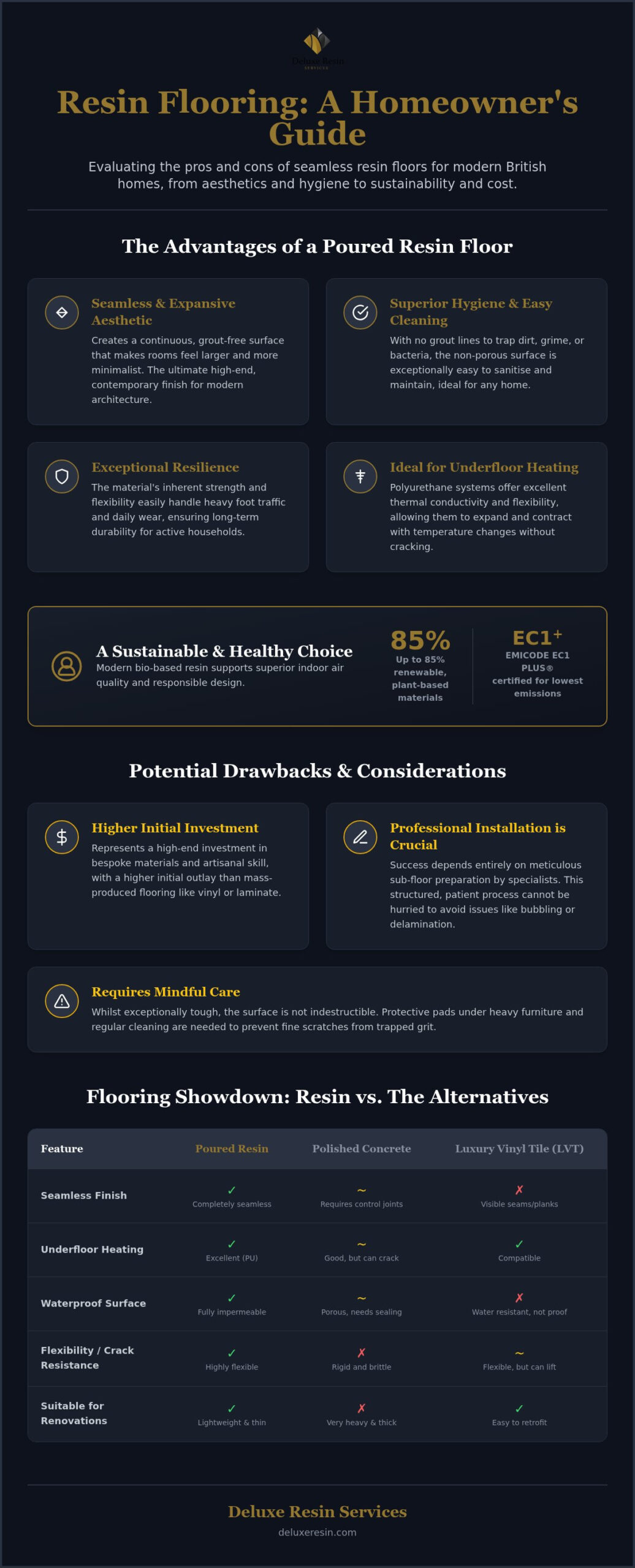
Modern interiors shouldn’t compromise your health. We utilise systems with EMICODE EC1 PLUS® certification, which ensures the lowest possible emissions for superior indoor air quality. A professional bio-based resin floor installation incorporates up to 85% renewable, plant-based materials, significantly reducing the environmental footprint of your renovation. When evaluating resin flooring pros and cons UK clients find that these certifications, alongside Cradle to Cradle standards, are essential for creating a circular and responsible domestic environment.
Potential Drawbacks and Considerations for Homeowners
Investing in a seamless surface requires a shift in perspective regarding project budgets. Unlike mass-produced laminates or vinyl, resin represents a high-end investment in both material quality and artisanal skill. While the initial outlay is higher, you’re securing a bespoke finish tailored specifically to your home’s architecture. When evaluating the resin flooring pros and cons UK market, it’s clear that quality comes at a premium. Some homeowners worry that resin might feel too industrial. In reality, a vast array of customisable colours and matte textures allows for a warm, inviting atmosphere that rivals traditional stone. According to The Resin Flooring Association (FeRFA), adhering to these high industry standards is what guarantees the system’s long-term value.
Whilst the surface is exceptionally tough, it isn’t indestructible. It requires mindful care to prevent fine surface scratches caused by trapped grit or the movement of heavy furniture. Simple maintenance routines keep the floor pristine, but using protective pads under table legs is a sensible precaution for any luxury interior. If you’re curious about how these surfaces perform in high-traffic zones, you can enquire about our domestic solutions for more tailored advice.
The Crucial Importance of Professional Sub-Floor Preparation
The success of any installation depends entirely on what lies beneath the liquid pour. Specialists must meticulously organise the sub-floor, ensuring it’s perfectly level and moisture-free. Domestic resin flooring specialists are essential here; they prevent common pitfalls like bubbling or delamination that often compromise non-professional applications. This process involves a structured timeline that cannot be hurried. The curing stages must proceed naturally to allow the chemical bonds to stabilise, ensuring the final surface remains flawless for decades. When weighing up resin flooring pros and cons UK homeowners must balance the desire for speed against the necessity of a patient, expert-led installation.
Making the Decision: Is Resin Right for Your Project?
Deciding on the right surface involves more than just aesthetics; it requires a practical assessment of your home’s environmental conditions. In the UK, the integration of underfloor heating is a primary consideration for modern renovations. Polyurethane resin systems are particularly well-suited for this. Their inherent flexibility allows them to expand and contract with temperature shifts without the risk of hairline fractures. When comparing resin flooring pros and cons UK homeowners find that whilst polished concrete offers a similar look, it’s often too heavy or thick for retrofitting in existing properties. Luxury Vinyl Tiles (LVT), though popular, cannot match the truly seamless, waterproof nature of a poured resin floor in high-risk areas like bathrooms or busy kitchens.
Resin acts as a luminous canvas for open-plan living, reflecting natural light across its seamless expanse to enhance the perceived architectural volume of your home.
Resin vs Traditional Flooring: A Quick Comparison
Traditional materials like timber or ceramic tiles often suffer from structural vulnerabilities; wood is prone to moisture damage and tiles can crack under impact. Resin provides a monolithic surface that outlasts these options in terms of structural integrity and minimal maintenance. For areas with large bifold doors, UV stability is paramount. Polyurethane systems are naturally resistant to sunlight, preventing the yellowing often associated with standard epoxy. Choosing between these systems depends on your specific domestic requirements. Epoxy is exceptionally hard and ideal for utility zones, whilst polyurethane offers the comfort and thermal efficiency required for living spaces. Balancing these resin flooring pros and cons UK factors ensures your investment remains as beautiful as the day it was installed.
Elevate Your Home with Sustainable Seamless Surfaces
Choosing the right surface is a balance of aesthetic vision and functional necessity. By weighing the resin flooring pros and cons UK homeowners face, you can determine if this seamless solution aligns with your lifestyle. Whilst the initial investment reflects the high-end craftsmanship required, the result is a durable, hygienic, and light-reflecting floor that elevates any interior. Our systems are formulated with up to 85% plant-based materials and are EMICODE EC1 PLUS® certified to ensure your home remains a healthy, eco-conscious environment. With our expert national installation, you can transition from traditional surfaces to a modern, sustainable masterpiece with absolute confidence. We’re here to guide you through every technical specification to ensure your project is a long-term success.
Enquire about our premium domestic resin flooring today to begin your journey towards a flawlessly finished home.
Frequently Asked Questions
Is resin flooring suitable for homes with underfloor heating in the UK?
Resin systems are highly compatible with UK underfloor heating, provided the sub-floor’s fully commissioned before application. The thin, conductive layer allows heat to permeate rooms efficiently, reducing energy waste. This integration ensures a comfortable, thermally efficient home whilst maintaining the surface’s structural integrity over many years of seasonal temperature shifts, provided the heating’s introduced gradually after the curing process.
How long does a domestic resin floor typically last?
A professionally installed domestic resin floor typically lasts between 10 and 20 years, depending on the specific system and usage levels. Polyurethane floors in kitchens usually offer a 10 to 15-year lifespan, whilst garage applications can often exceed two decades. This longevity is a key factor when weighing up resin flooring pros and cons UK homeowners consider for long-term property investment.
Is resin flooring slippery when wet, especially in bathrooms or kitchens?
Resin floors aren’t inherently more slippery than traditional tiles or polished concrete. We incorporate specific slip-resistant aggregates during the installation process to ensure safety in high-risk areas like bathrooms or kitchens. These finishes are designed to meet stringent UK safety standards, providing a secure, non-slip surface that remains safe for families even when the floor is exposed to moisture or spills.
How do you clean and maintain a seamless resin floor?
Maintaining a seamless surface is remarkably straightforward because there are no grout lines to trap dirt or bacteria. Daily cleaning typically involves a simple sweep and a mop using a pH-neutral detergent to preserve the floor’s lustre. Because the material is non-porous and resistant to most household spills, it doesn’t require the aggressive scrubbing or specialist sealing often needed for natural stone.