

What if a surface can drain rainwater effectively and still be vulnerable to cracks? That’s the distinction at the heart of breathable resin bound surfacing: permeability helps water pass through the finished layer, but it doesn’t guarantee a stable surface. In a bound system, aggregate is mixed with resin, leaving small gaps between particles. Resin-bonded finishes are made differently and aren’t permeable in the same way.
If you’re considering this finish for a driveway or another outdoor area, it’s understandable to wonder whether trapped water or ground movement could cause damage. This guide explains how aggregate and resin create a permeable surface, why crack resistance depends on more than breathability, and what to ask before commissioning the work. It also covers practical checks to make when comparing a proposed system with the condition and intended use of your site.
Key Takeaways
- Learn how the arrangement of resin and aggregate creates pathways for water to pass through a suitable surface.
- Understand why breathable resin bound surfacing can help manage water, but cannot guarantee crack prevention.
- See why the condition and suitability of the base matter when assessing the risk of cracking or movement.
- Know what to discuss with an installer, from how you’ll use the surface to site preparation and water management.
What Makes Breathable Resin Bound Surfacing Permeable?
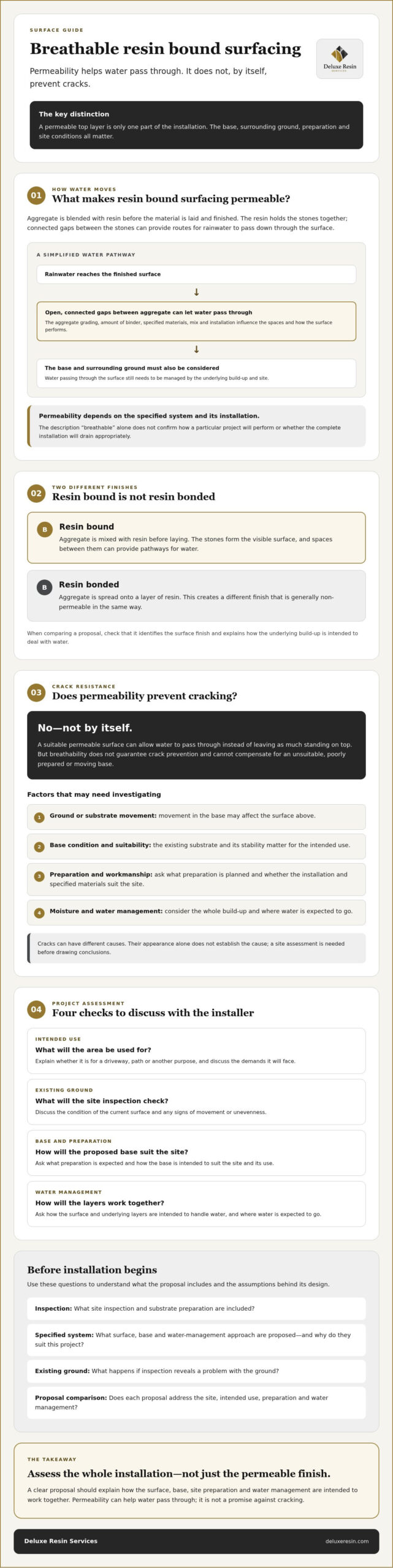
Breathable resin bound surfacing is an aggregate-and-resin finish with connected gaps between the stones. Where those voids remain open through the surface, rainwater can pass down rather than simply running across it. The actual permeability depends on the specified materials, mix and installation, so the description alone doesn’t confirm how a particular project will perform.
For a resin bound finish, aggregate is blended with resin before the material is laid and finished. The aggregate grading and amount of binder influence the spaces between particles: the resin holds the stones together, while connected gaps allow water to move through. Resin-bound paving describes this type of permeable surface, but water management also depends on the layers beneath it. When reviewing a proposal, check that it explains both the surface finish and how the underlying build-up is intended to deal with water.
How do resin bound aggregates let water pass through?
Resin bound surfacing mixes aggregate with resin; resin bonded surfacing spreads aggregate onto a layer of resin. In the bound method, the stones form the visible surface and the spaces between them can provide routes for water. In the bonded method, aggregate sits on top of the resin, creating a different, generally non-permeable finish.
Think of the surface as one part of a wider water-management system. Water passing through it still needs to be handled by the base and surrounding ground. Ask what lies beneath the finish, how the proposed build-up suits the site, and where water is intended to go. A permeable top layer alone doesn’t establish that the complete installation will drain appropriately.
Does Breathable Resin Bound Surfacing Prevent Cracking?
Not by itself. A suitable permeable surface can allow water to pass through instead of leaving as much standing on top, but how effectively moisture is managed depends on the complete build-up and site conditions. Breathability does not guarantee crack prevention, and it can’t compensate for an unsuitable, poorly prepared or moving base.
Permeability can help water pass through, but it is not a crack-proof guarantee. Cracks can have different causes, so their appearance alone doesn’t establish the cause. Moisture-related issues are one consideration; ground or substrate movement, inadequate preparation and installation problems may also need investigating. A site assessment is needed before drawing conclusions.
What factors can still cause cracks in a permeable surface?
Start with what’s beneath the finish. The condition of the existing substrate, the stability of the base and the preparation carried out before installation all matter. If the base moves or isn’t suitable for the intended use, the surface above may be affected. Workmanship and whether the specified materials suit the site are also worth discussing with the installer.
Drainage is a system question, not just a surface feature. Ask how the proposed layers work together and where water is expected to go. A permeable finish alone doesn’t confirm that the whole installation will manage water appropriately. For broader industry information, consult FeRFA, The Resin Flooring Association.
For a project-specific discussion, you could ask an installer about their resin driveway installation approach, including how they assess the site and prepare the base. Ask them to explain what the proposed system is designed to do and what assumptions they’ve made about the existing ground. This helps you assess the proposal without treating permeability as a promise against cracking.
How to Assess a Breathable Resin Bound Surfacing Project
A careful assessment starts with the site, not just the finish. Before choosing breathable resin bound surfacing, work through these points with the installer:
- Clarify the intended use. Explain whether the area is for a driveway, path or another purpose, and discuss the demands it will face.
- Assess the existing ground. Ask what the site inspection will check, including the condition of the current surface and any signs of movement or unevenness.
- Discuss the base. Find out what preparation is expected and how the proposed base suits the site and intended use.
- Confirm water management. Ask how the surface and underlying layers are intended to handle water, and whether the approach accounts for site conditions.
What should you ask before installation begins?
Ask what site inspection and substrate preparation are included in the proposal. Request a clear explanation of the specified surface, base and water-management approach, including why they suit your project. Check whether the proposal states what will happen if inspection reveals a problem with the existing ground. If anything is unclear, ask the installer to explain the assumptions behind the design before work begins.
When comparing proposals, look beyond the description of the finish. Check that each one addresses the site, intended use, preparation and water management, so you can compare the proposed work on the same basis. Deluxe Resin Services provides resin bound surfacing and driveway projects across the UK, including site preparation, material supply and professional finishing. You can discuss resin bound surfacing with the team and ask what your site may require.
Choose a System with the Whole Site in Mind
Breathable resin bound surfacing can let water pass through connected gaps between aggregate, but permeability alone doesn’t make a surface crack-proof. The condition and stability of the base, preparation, workmanship and the way the complete build-up manages water all influence how the installation performs.
Before choosing a system, clarify how the area will be used, ask what the site inspection covers and have the installer explain the proposed base and water-management plan. Clear, project-specific answers help you assess whether the design suits your ground and intended use. Be cautious of proposals that focus only on the visible finish without explaining the preparation or the layers beneath it.
Deluxe Resin Services undertakes resin driveway and surfacing projects across the UK. Project-based work includes site preparation, material supply and professional finishing. If you’re planning an installation, discuss your resin bound surfacing project. Asking about your site and the proposed build-up is a practical first step towards choosing a suitable system.
Frequently Asked Questions
What is breathable resin bound surfacing?
Breathable resin bound surfacing is a resin-and-aggregate finish with connected voids that can let water pass through the surface. How permeable it is depends on the specified materials and the quality of installation. It’s different from resin bonded surfacing, and drainage also depends on the base and site conditions, not just the visible finish.
Does breathable resin bound surfacing stop cracks?
No, the term doesn’t guarantee that cracks won’t occur. Permeability may help water move through a suitable system, but cracking can also relate to the substrate, base stability, ground movement, preparation or installation. Ask an installer to assess the site and explain how the proposed build-up is intended to suit its specific conditions.
Can resin bound surfacing be laid over an existing driveway?
It may be possible, but an overlay isn’t suitable for every driveway. The existing surface’s condition and stability, along with the proposed system, need to be assessed on site. Ask what preparation is required and how the current base may affect the finished surface and water management before deciding whether an overlay is appropriate.
Is resin bound surfacing the same as resin bonded surfacing?
No, the terms describe different installation methods. Resin bound surfacing is generally made by mixing aggregate with resin before laying the mixture. Resin bonded surfacing typically involves spreading aggregate over a resin layer. The finishes can differ in appearance, texture and permeability, so check which method a specification describes before comparing proposals.