

Rubber isn’t automatically the right answer for every home gym. The best flooring for a home gym UK homeowners can choose depends on what happens on it: a barbell landing, a treadmill running and a yoga mat staying put all place different demands on the surface.
Grip, impact protection, cleaning, noise and the room’s finish matter too. With rubber, foam, vinyl, cork and resin all on the shortlist, it helps to decide what the floor needs to do before comparing how it looks.
This guide compares the main options and shows how to match them to your training, equipment and room. You’ll see where cushioning matters, why seamless resin can suit a garage conversion but isn’t a substitute for gym-specific shock absorption, and what to consider before planning a professionally installed domestic floor.
Key Takeaways
- Compare rubber, foam, vinyl, cork and turf by the activities and equipment they need to support, not appearance alone.
- Assess comfort, grip, coverage, cleaning and the condition of the existing floor before choosing a surface.
- The best flooring for a home gym UK homeowners choose depends on balancing workout demands with practical priorities for the space.
- Consider seamless domestic resin for a durable, low-maintenance finish, whilst planning separate cushioning where your training needs it.
Best flooring for a home gym UK: what does your workout need?
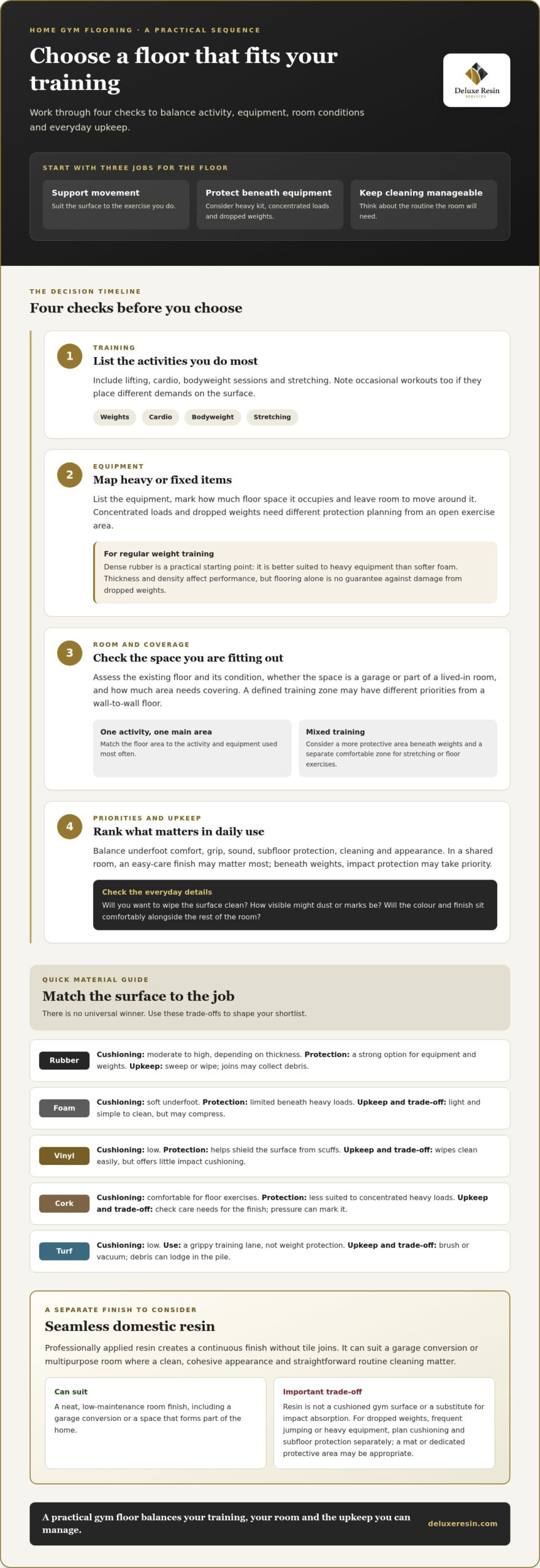
The right floor depends on your training, equipment, room and comfort priorities. A garage with a squat rack has different demands from a spare room used for yoga. Start by separating three jobs: providing a suitable surface for movement, protecting the floor beneath equipment, and making regular cleaning manageable.
Which flooring suits weights, cardio and mat-based exercise?
For regular weight training, dense rubber is a practical starting point. It can help protect the subfloor and is better suited to heavy equipment than softer foam. Thickness and density affect how a product performs, but flooring alone shouldn’t be treated as a guarantee against damage from dropped weights. Foam can suit lighter, low-impact or mat-based exercise, whilst vinyl and cork offer firmer surfaces for general workouts. Turf can provide a grippy strip for drills, but won’t offer the same cushioning as rubber.
Match the main floor area to the activity and equipment you use most often. For mixed training, zoning can make the choice easier: use a more protective surface beneath weights, then create a separate comfortable area for stretching or floor exercises.
| Surface | Cushioning | Floor protection | Upkeep and trade-off |
|---|---|---|---|
| Rubber | Moderate to high, depending on thickness | Strong option for equipment and weights | Sweep or wipe; joins may collect debris. |
| Foam | Soft underfoot | Limited beneath heavy loads | Light and simple to clean, but may compress. |
| Vinyl | Low | Helps shield the surface from scuffs | Wipes clean easily; offers little impact cushioning. |
| Cork | Comfortable for floor exercises | Less suited to concentrated heavy loads | Check care needs for the finish; pressure can mark it. |
| Turf | Low | Useful as a training lane, not weight protection | Brush or vacuum; debris can lodge in the pile. |
There’s no universal winner. The best flooring for a home gym UK household chooses should suit its main training demands, while balancing comfort, protection and cleaning. If you do several types of exercise, consider whether one surface can serve them all or whether separate zones would work better.
How to choose home gym flooring: assess comfort, grip and the room
There isn’t one material that suits every home gym. A surface that feels comfortable for stretching may not protect the floor beneath a weight bench, while a robust finish may feel firm during mat-based exercise. Assess the space and your priorities before settling on a floor.
What should you check before choosing a home gym floor?
Use this sequence to turn general preferences into a practical shortlist:
- List your activities. Note what you do most often, from lifting and cardio to bodyweight sessions or stretching. Include occasional workouts if they place different demands on the surface.
- Record your equipment. List heavy or fixed items, note how much floor space they take up, and allow room to move around them. Concentrated loads and dropped weights create different protection needs from an open area for exercise.
- Assess the room. Check the existing floor and its condition, whether the space is a garage or part of a lived-in room, and how much area needs coverage. A defined training zone may call for different priorities from a floor used wall to wall.
- Rank your priorities. Decide how you’ll balance underfoot comfort, grip, sound, subfloor protection, cleaning and appearance. In a shared room, an easy-care finish may matter most; beneath weights, impact protection may take priority.
Think about upkeep in everyday terms. Will you want to wipe the surface clean, and how visible might dust or marks be? Consider whether the colour and finish will sit comfortably alongside the rest of the room. These details can rule out an option that looks suitable on paper but doesn’t fit daily use.
A practical gym floor balances your activities, the room it serves and the upkeep you’re prepared to manage. If a clean, low-maintenance finish is a priority, professionally installed domestic resin flooring is one option to weigh against your cushioning and impact requirements.
Could seamless resin flooring work in a home gym?
Resin can suit a home gym where you want the room to feel like part of the home rather than a dedicated training studio. Professionally applied domestic resin flooring creates a continuous finish without tile joints. Deluxe Resin Services installs durable, non-slip, low-maintenance resin floors, making this an option for a garage conversion or multipurpose room where a clean, cohesive appearance matters.
When is a seamless domestic floor the right priority?
Consider resin if you value a neat finish and straightforward routine cleaning. A seamless surface avoids joins between separate flooring pieces, and its appearance can complement the wider room. For a closer look at the finish and how it can work in a home, explore this guide to domestic resin flooring.
There is a clear trade-off. Resin is not a cushioned gym surface, so it shouldn’t be treated as a substitute for flooring selected to absorb impact. If your sessions involve dropped weights, frequent jumping or heavy equipment, consider those cushioning and subfloor-protection needs separately. Depending on how you train, a mat or dedicated protective area may form part of the room plan.
Before deciding, picture the floor in everyday use: where equipment will sit, which areas need extra protection and how you’ll clean the room. Resin installation includes site preparation and finishing, while ongoing care is another practical consideration. This resin floor maintenance guide explains how to care for a seamless surface.
The best flooring for a home gym UK homeowners choose should fit both their training demands and the room’s priorities. If a refined, easy-care finish is high on your list, explore Deluxe Resin Services’ domestic resin flooring and consider how it could work alongside the cushioning your training requires.
Plan a home gym floor that works for the long term
Before settling on a finish, picture how you want the room to function as your training changes. You might need a dedicated impact-protected area alongside a clean, considered surface for the rest of the space. Planning these zones can help you choose the best flooring for a home gym UK home without expecting one material to meet every need.
If a seamless finish suits your priorities, Deluxe Resin Services’ domestic installation includes site preparation, material supply and expert finishing. Its approach also emphasises low-maintenance flooring and environmental responsibility. Resin isn’t a substitute for cushioning where your workouts call for it, but it can be a considered choice for the wider room.
Explore seamless domestic resin flooring and take the next step towards a gym space that feels practical, polished and ready to support your routine.
Frequently Asked Questions
Is rubber flooring best for a home gym?
Rubber is a common choice, but it isn’t automatically the best flooring for a home gym UK households use. Suitability depends on your sessions, equipment, comfort and room priorities. A weight bench in a garage calls for different considerations from a spare room used for stretching, where ease of cleaning or a softer feel may matter more.
Can you put home gym flooring over carpet?
Sometimes, but there isn’t a universal yes or no: carpet pile, underlay and the chosen flooring system all affect stability. A soft, deep carpet may allow interlocking sections to shift underfoot, while equipment can wobble or leave pressure marks. Consider the floor beneath, how machines will sit and move, and follow the flooring manufacturer’s guidance for fitting over carpet.
What is the best flooring for a home gym with weights?
For a weights area, dense rubber is often a practical option, but match it to how you’ll use the space. A rack holding weights places a different demand on flooring from repeated deadlifts or moving a bench across the room. Consider both equipment footprint and impact, then weigh protection and cushioning separately from appearance and cleaning. No surface can be assumed to prevent damage in every setup.
Is resin flooring suitable for a home gym?
Yes, resin can be suitable if a seamless, durable, non-slip and low-maintenance finish suits the room. It is a firm surface, however, not a cushioned gym layer. If your programme includes impact-heavy exercise or dropped weights, consider those cushioning requirements separately and plan suitable protective areas. Its suitability rests on how you train, not appearance alone.