

No resin system resists every chemical, concentration, mixture or temperature. Choosing chemical resistant resin flooring in the UK means matching the system to the substances present and how they contact the floor. Epoxy, polyurethane and polymethyl methacrylate (PMMA) are among the options to compare, but no single system suits every site.
Chemical protection is only one part of the decision. The floor must also support safe movement and practical cleaning while meeting the demands of daily operations.
This guide compares epoxy, polyurethane and methacrylic systems and explains what to consider when specifying flooring and wall coatings. It covers how chemical exposure, slip resistance, cleanability and site conditions shape the choice, helping you make an informed decision for your facility.
Key Takeaways
- Compare epoxy, polyurethane and methacrylic systems against the chemicals, concentrations and temperatures in your environment; no resin type resists every exposure.
- Balance slip resistance with cleanability by considering how floor texture affects both safe movement and routine cleaning.
- Specify the floor and wall coating system around actual site conditions, including exposure duration, chemical combinations and the required detailing.
- For domestic or industrial flooring needs, explore resin flooring options that align with your priorities for performance and sustainability.
Comparing polyurethane, methacrylic and epoxy resin systems
Choosing chemical-resistant resin flooring in the UK starts with the chemicals and conditions on site. Compare complete systems, not resin names alone.
Resin system options
Epoxy, polyurethane and polymethyl methacrylate (PMMA) are the main resin flooring types. Polyurea, polyaspartic and vinyl ester are other system options. For chemical-resistant resin flooring in the UK, compare the proposed build-up, intended use and supporting resistance data. BS EN 13529 is a relevant standard for assessing resistance to severe chemical attack; test conditions matter when interpreting results.
Resistance to chemicals and process fluids
Which resin flooring suits acids, solvents and alkalis? No resin resists every chemical, concentration, mixture or temperature. Match system evidence to each substance and its contact time. Epoxy coatings can be specified for hydraulic fluids when the formulation suits the fluid and exposure. Installation requirements depend on preparation, repairs, system build-up, thickness and site conditions. Request a tailored quote. Preparation generally involves cleaning and creating a sound surface before applying the specified layers.
Matching flooring to facility use
For laboratories, warehouses and factories, weigh chemical exposure alongside traffic, cleaning and process demands. Food-processing floors may use epoxy if impervious, non-absorbent, washable and non-toxic, according to Food Standards Scotland. Installation involves assessing and preparing the substrate, applying the system layers and allowing them to cure before use. NHS recommends resin-bonded finishes for rigid slabs, not slabs that deflect under load. UK suppliers should provide relevant system evidence and clear warranty terms, including their scope and conditions.
Flowcoat ESD SF41 is an anti-static, solvent-free epoxy resin floor coating with adjustable anti-slip properties. Specify each area’s resin type, system, build-up, thickness and detailing, matching resistance to chemical exposure.
Balancing slip resistance with cleanability
Floor texture affects both grip and how easily dirt or residue can be removed. Match the finish and cleaning routine to the facility’s hygiene needs and exposure risks.
Cleaning and maintenance requirements
For floor hygiene, consider how concrete joints, equipment and process residues affect daily cleaning. A seamless resin surface can be easier to wash than a floor with dirt-trapping joints, while a heavily textured finish may need more attention. Set out the cleaning products, tools and frequency suited to the site, then maintain the floor according to the system’s care instructions. Include checks for wear or damage in routine maintenance.
Spill exposure and slip hazards
Clean chemical spills as soon as possible to support health and safety. Contact time matters: liquid left on the surface can become more concentrated as it evaporates, increasing the challenge for the coating. Spills can also create slip hazards, so prompt containment and cleaning should be part of site response procedures.
How long does resin flooring take to install and cure? It depends on the resin, preparation and site conditions; Resinstone methacrylic resin is ready for use in under 12 hours. Chemical spills, abrasion and thermal shock can damage a floor if its system and finish aren’t designed to withstand the actual exposure, traffic and temperatures. A smoother finish can aid cleaning, while added texture can improve grip but may retain residue. Consider both outcomes before selecting flooring solutions. For industrial resin flooring options, review industrial resin flooring alongside the site’s cleaning and safety requirements.
Chemical-resistant floor and wall coating systems
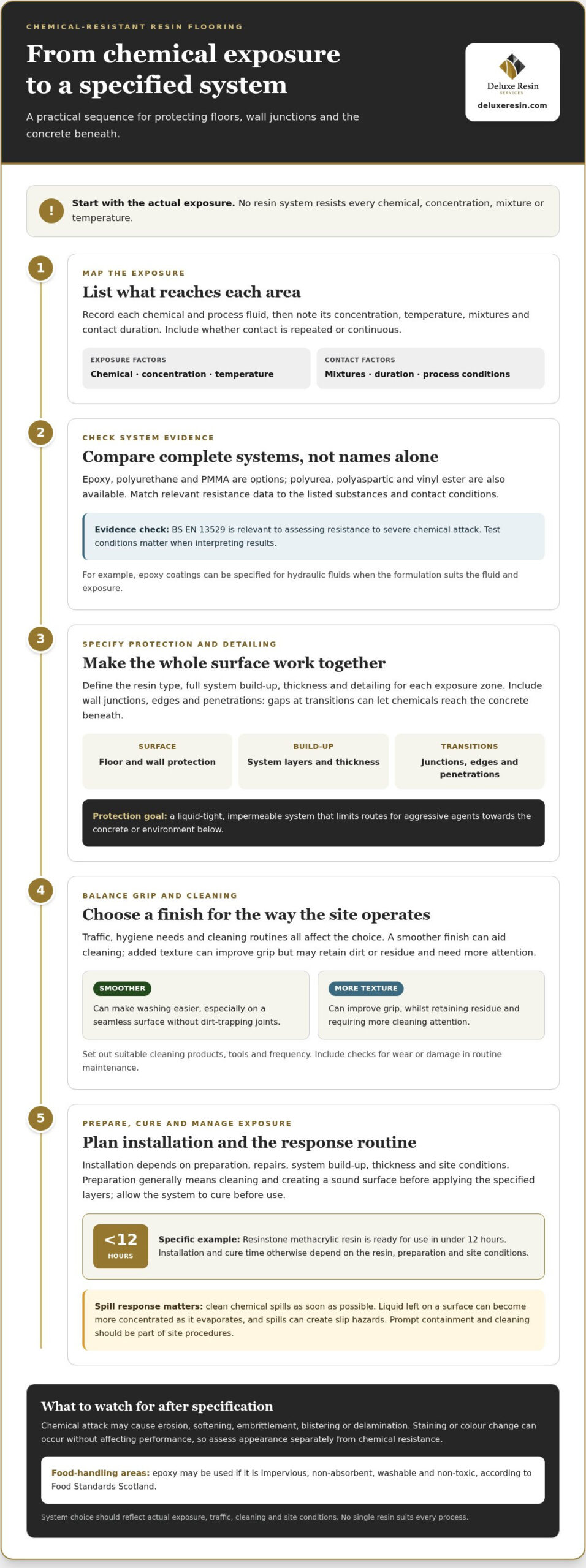
In industrial areas, flooring must protect concrete from aggressive liquids and suit the site’s actual processes. A durable system needs a chemically resistant surface and reliable detailing at wall junctions, edges and penetrations. These transitions matter because gaps can allow chemicals to reach the concrete beneath the finish.
Start by listing each chemical, its concentration and temperature, any mixtures, and the duration of exposure. Specify the resin type, full system build-up, floor thickness and detailing for each area. A polyurethane system may suit a particular process, but the material must withstand the chemicals and repeated or continuous contact involved. No resin system resists every chemical under every condition.
The system should also remain liquid-tight and impermeable, limiting routes that aggressive agents could take towards the concrete or environment below. Unprotected concrete can deteriorate under heavy or everyday chemical exposure. Chemical attack on resin may cause erosion, softening, embrittlement, blistering or delamination. Staining or colour change can occur without affecting performance, so assess appearance separately from chemical resistance.
For food-handling areas, epoxy may be used if it is impervious, non-absorbent, washable and non-toxic, according to Food Standards Scotland. Build the specification around the facility’s process: identify exposure zones, select the appropriate floor and wall protection, then define junction details. To discuss flooring requirements for your facility, arrange a project conversation.
No single resin flooring system resists every chemical under every condition. Choose the resin and full system build-up to match each chemical’s concentration, temperature, mixtures and contact time. Polyurethane may suit some processes, while epoxy may be used in food-handling areas if it meets the stated requirements.
Deluxe Resin Services: Domestic Resin Flooring
Deluxe Resin Services installs Domestic Resin Flooring for homeowners seeking a seamless, practical finish and Industrial Resin Flooring for commercial and operational spaces. Start with the setting: consider how the floor will be used, cleaned and exposed to chemicals before choosing a system.
For projects where environmental credentials matter alongside performance, Deluxe Resin Services’ products are formulated with up to 85% renewable, plant-based materials and hold certifications such as EMICODE EC1 PLUS® and Cradle to Cradle. Resin Driveways and Sustainable Resin Solutions are also available for other project requirements.
Share your flooring requirements with Deluxe Resin Services to discuss your project and request a tailored quote.
Plan your next flooring project
Turn your facility’s priorities into a clear project brief. Record the chemicals and process fluids present, where exposure occurs, cleaning routines, traffic patterns and any areas requiring extra slip resistance. This gives the flooring specification a practical foundation and helps match the surface to how each space is used.
For chemical-resistant resin flooring in the UK, Deluxe Resin Services installs Domestic Resin Flooring and Industrial Resin Flooring, as well as Resin Driveways. Share your site or home requirements to begin a focused conversation about the right direction for your project.
Contact Deluxe Resin Services today to discuss your flooring project and take the next step with confidence.
Frequently Asked Questions
What types of chemical-resistant resin flooring are available in the UK?
Facilities can choose from epoxy, polyurethane (PU), methacrylic or PMMA, polyurea, polyaspartic and vinyl ester systems. These options differ in formulation and design, so compare the complete specified build-up rather than resin names alone. For example, a warehouse exposed to process fluids needs a system selected for those fluids and operating conditions, not simply a generic “chemical-resistant” label.
How do epoxy, polyurethane and vinyl ester resin flooring compare for chemical resistance?
No system is universally resistant to every chemical. Assess epoxy, polyurethane and vinyl ester against the exact chemical, concentration, temperature, contact time and any mixtures present. A sound comparison uses product resistance data for the actual exposure scenario. For example, intermittent splashes of a cleaning solution create different demands from prolonged contact with a concentrated process chemical.
How should chemical-resistant resin flooring be cleaned, maintained and repaired?
Use cleaning products and equipment compatible with the installed resin system, and follow its care instructions to protect the finish. Check regularly for cracks, lifting edges, worn areas or surface changes, especially around joints and frequently used routes. Address damage promptly: suitable resin floors can be repaired or refinished rather than fully replaced, with repairs matched to the existing system.
What chemical resistance test standards apply to resin flooring in the UK, such as BS EN 13529?
BS EN 13529 is a relevant standard for assessing resistance to severe chemical attack. Test conditions matter when interpreting the results.