

A weed in a driveway isn’t automatically a problem, but growth in cracks and joints can spread and make the surface harder to maintain. The practical answer to how to stop driveway weeds permanently is to remove as much of the root as possible, then address the gaps where weeds take hold. Pressure washing alone may only clear the visible growth: weeds can return within weeks if roots remain in cracks or joints.
It’s frustrating to clear a driveway only to see weeds return, especially when the right method depends on the surface. This guide explains how to remove weeds from paving, concrete, tarmac and gravel, and compares vinegar, salt and boiling water. Lasting prevention starts with addressing both the weeds and the places they grow.
Key Takeaways
- Choose weed removal for the surface: lift roots from paving joints, and clear loose material from tarmac cracks before filling them.
- Vinegar mainly scorches foliage, salt can affect nearby soil and plants, and boiling water is best kept to small, isolated patches.
- For longer-term control, remove existing growth and close the gaps or joints where new weeds can establish.
- If you’re considering a new driveway surface, compare how resin driveways may suit your property and maintenance priorities.
1. Choosing treatments for different driveway surfaces
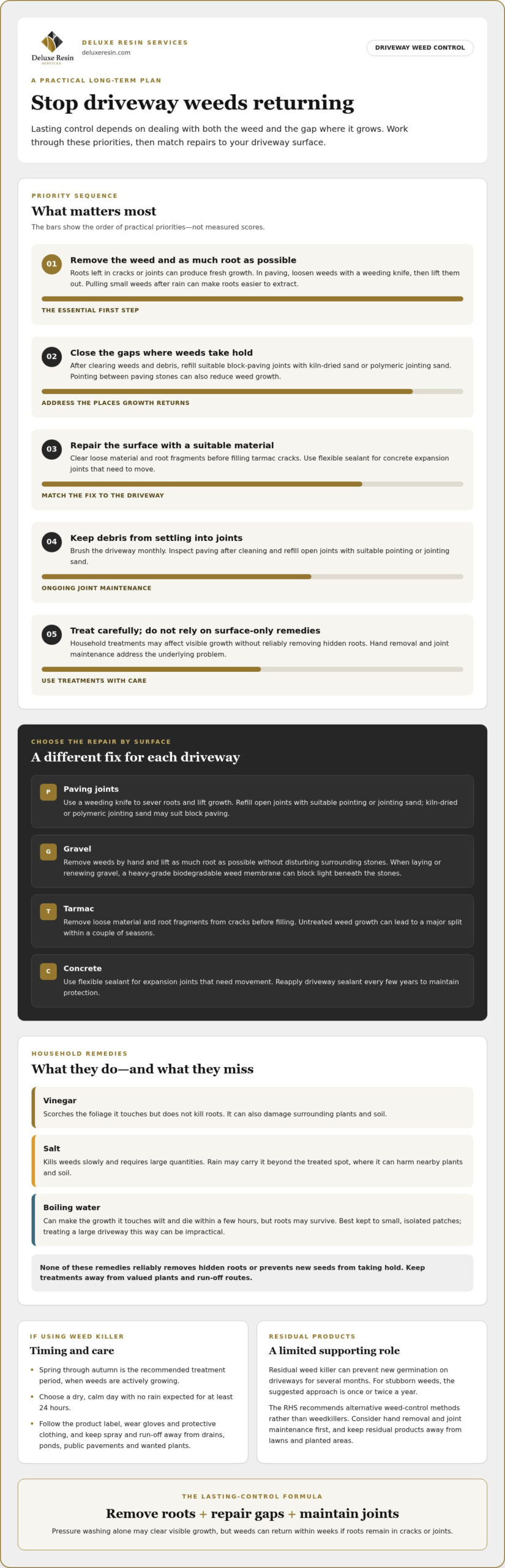
Match the removal method to the surface and the weed’s roots. In paving joints, use a weeding knife to sever roots and lift out the growth; annual meadow grass, sowthistle and chickweed commonly establish on hard surfaces. Pull small weeds after rain, when moist soil makes roots easier to extract. On gravel, remove weeds by hand and lift as much root as possible without disturbing the surrounding stones. In tarmac cracks, clear loose material and root fragments before applying crack filler. Use flexible sealant for concrete expansion joints that need to move.
In the UK, follow the weed killer’s label and keep spray and run-off away from drains, ponds and public pavements. Avoid treating near plants you want to keep. Even organic methods such as vinegar can harm surrounding plants and soil.
Professional weed removal and repointing costs depend on the area, access, surface condition and extent of joint repairs. The price is provided after a quote request.
Before treatment, loosen weeds in paving cracks with a weeding knife, then pull them out with as much root as possible. Don’t rely on pressure washing alone: if roots remain in cracks or joints, weeds can return within weeks. Strong pressure may also remove jointing material, so take care around paving.
Brush the driveway monthly to clear debris before it settles into joints. After cleaning, inspect paving and refill open joints with suitable pointing or jointing sand. For tarmac cracks, remove loose material before filling.
For chemical weed killers, spring through autumn is the recommended treatment period, when weeds are actively growing. Choose a dry, calm day with no rain expected for at least 24 hours, and wear gloves and protective clothing.
2. Effectiveness of vinegar, salt and boiling water
For anyone wondering how to stop driveway weeds permanently, household remedies have clear limits. Vinegar scorches the foliage it touches but doesn’t kill roots, so a dandelion may grow back. It treats the surface rather than reliably removing established weeds. Vinegar can also damage garden plants and soil, so avoid using it near borders or wanted vegetation.
Salt kills weeds slowly and requires large quantities. It can also harm nearby plants and soil, while rain may carry it beyond the treated spot. That makes salt a poor choice beside a garden bed or anywhere you want plants to keep growing. Don’t scatter it across driveway joints to prevent future growth.
Boiling water can make the weed growth it touches wilt and die within a few hours. However, it affects only the parts it reaches, so roots may survive and produce fresh shoots. Pouring it onto leaves in a narrow joint may leave deeper roots untouched. Treating every weed this way can also be impractical across a large driveway.
These remedies work differently, but none reliably removes hidden roots or prevents new seeds from taking hold. To stop driveway weeds permanently, choose a method that addresses the roots and the conditions allowing growth to return. For a single isolated plant, careful removal avoids spreading vinegar or salt into nearby soil. Keep any treatment away from valued plants and areas where run-off could reach them.
3. What is the most effective long-term way to stop weeds growing in a UK driveway?
For homeowners asking how to stop driveway weeds permanently, lasting control means addressing existing growth and the places weeds take hold. After clearing weeds and debris, refill suitable block-paving joints with kiln-dried sand or polymeric jointing sand. Pointing between paving stones can also reduce weed growth. Choose a material suited to the paving and the condition of its joints.
Residual weed killer can prevent new germination on driveways for several months. For stubborn weeds, the suggested approach is to apply it once or twice a year. The RHS recommends alternative weed-control methods rather than weedkillers, so consider hand removal and joint maintenance before relying on chemical treatment. Keep residual products away from lawns and planted areas where vegetation is wanted.
Gravel calls for prevention beneath the surface. A heavy-grade biodegradable weed membrane can block light and smother perennial weeds by preventing photosynthesis long enough to kill most of them. This is most practical when laying or renewing gravel, because the membrane sits beneath the stones rather than treating growth on top.
Repairing cracks also limits places where weeds can return. In tarmac, clear loose material and root fragments before filling cracks; untreated weed growth can lead to a major split within a couple of seasons. For concrete expansion joints that need movement, flexible sealant suits better than rigid filler. Reapply driveway sealant every few years to maintain protection. A lasting plan for how to stop driveway weeds permanently can start with these surface-specific repairs. If you’re considering a new surface, explore resin driveway options as part of your plans.
Deluxe Resin Services: Domestic Resin Flooring
Deluxe Resin Services offers resin driveways as an alternative to traditional surfacing when you’re considering a wider driveway renewal, rather than another round of weed treatment. A new surface can change the areas where weeds establish, but it doesn’t remove the need to keep edges and adjoining joints clear. The company’s resin products are formulated with up to 85% renewable, plant-based materials and hold certifications including EMICODE EC1 PLUS® and Cradle to Cradle. These details may matter if material choice and environmental considerations are part of your decision. For domestic projects, Domestic Resin Flooring is another offering, designed for interior surfaces rather than driveway weed control. Contact Deluxe Resin Services to discuss your driveway project.
Plan a driveway that suits the years ahead
If you’re deciding how to stop driveway weeds permanently, think beyond the next treatment. Consider how much ongoing maintenance you want, the condition of the existing surface, and whether targeted repairs will address the places weeds return. For persistent problems or a driveway nearing renewal, a new surface may be a more suitable long-term project than repeatedly treating the same cracks and joints. The right choice depends on your property and priorities, including appearance and material preference. Deluxe Resin Services offers resin driveways alongside domestic and industrial resin flooring, giving you options to explore for different projects. A considered decision now can help you plan a surface that works with your home and maintenance routine. Contact Deluxe Resin Services today to discuss your driveway project and take a confident next step.
Frequently Asked Questions
Do I need to get rid of weeds on hard surfaces?
Not every small weed needs immediate treatment, but remove growth spreading through a crack or obstructing a path. A lone plant on an otherwise sound surface can be monitored, while a weed in a widening gap may signal that the joint needs attention. Decide based on its location, the surface condition and whether treatment could affect nearby plants.
Does salt kill weeds on driveways?
Salt can kill weeds, but it isn’t a good routine driveway treatment, especially beside a garden or planted border. It can harm surrounding plants and soil, and rain may carry it beyond the treated spot. For an isolated weed near valued planting, choose a removal method that doesn’t leave salt in the surrounding ground.
How do I stop weeds growing through tarmac?
Repair a tarmac crack before it widens: remove the weed and loose debris, then fill the clean crack with suitable crack filler. Check the repaired area during routine driveway upkeep, particularly if fresh growth appears nearby. A recurring weed may mean roots or fragments remain, so clear the crack thoroughly before repairing it again.
Should I use weedkiller?
Use weedkiller selectively, rather than as the default response to every driveway weed. Choose a product labelled for the intended use, follow its instructions and take care around lawns, garden beds and other wanted vegetation. A contact product affects the plant surface, while a systemic product is absorbed by the plant. Match the product to the weed and the area being treated.
What about home remedies?
Home remedies can affect visible growth without resolving the cause of recurring weeds. Vinegar, salt and boiling water aren’t harmless simply because they’re household materials; each can affect surrounding plants or soil. Avoid applying mixtures near planting or letting them run into beds. For one isolated weed, careful removal can prevent exposing nearby areas to a homemade treatment.