

Epoxy terrazzo is defined by what lies beneath its decorative chips: an epoxy or polyurethane base bonded directly to a concrete substrate, rather than a cement base. Terrazzo effect resin flooring embeds decorative aggregates in resin, then grinds and polishes the surface to create a smooth, stone-like finish. This resin-based structure sets it apart from traditional cement terrazzo.
The appearance may be familiar, but the underlying system affects how the floor is built and installed. Understanding its layers shows how the resin binder and chosen aggregates work together, and helps you decide whether terrazzo effect resin flooring suits your space and design aims.
This guide explains the structure of epoxy terrazzo, how seamless resin terrazzo is laid and finished, and how decorative aggregates, including mirrored glass, shape its appearance. You’ll also learn what to consider during installation and how to assess whether terrazzo effect resin flooring suits your project.
Key Takeaways
- Understand how resin binder and decorative aggregates form a seamless terrazzo finish, from hand application through grinding and polishing.
- Explore how marble chips and mirrored glass can shape the floor’s appearance, including how glass fragments reflect light.
- See how epoxy terrazzo differs from cement terrazzo: its resin base bonds directly to the concrete substrate.
- Use the system’s structure, finish and installation steps to assess whether resin terrazzo suits your project and design goals.
Seamless resin terrazzo composition and installation
Resin terrazzo combines a resin binder with decorative aggregates, then is ground and polished into a continuous surface. Its composition, substrate and curing stages all influence the finish and installation process.
Resin and cementitious terrazzo composition
Epoxy terrazzo uses an epoxy or polyurethane base bonded directly to concrete, while cementitious terrazzo uses a cement base. Both embed decorative chips, but resin systems are thinner. Unlike terrazzo-look tiles, a poured resin finish has few or no joints, whereas tiles have visible grout lines. Resin terrazzo resists stains and can accommodate more movement, but achieving a seamless finish depends on careful installation.
Seamless finish and installation process
Installers prepare and prime the subfloor, apply the terrazzo by hand, then grind it with progressively finer diamond tools. A grout coat, UV-stable sealer and polish complete the smooth surface. Careful installation helps minimise joints across large areas. Poor adhesion and cracking are common risks; sound preparation, suitable curing and controlled temperatures help prevent them.
Resin flooring can be hand-applied in layers to a total depth of 3-4mm. A resin terrazzo installation typically takes 7 to 10 days from start to finish.
Subfloor preparation and temperature requirements
The concrete substrate needs preparation and primer before the terrazzo is laid. Cementitious and epoxy terrazzo require an installation temperature from 10 °C to 30 °C. UK building regulations and safety standards depend on the project and the floor’s intended use; the system must be specified accordingly. Underfloor-heating compatibility depends on the floor build-up and heating system.
Installation time and flooring lifespan
Allow 7 to 10 days for a typical resin terrazzo installation, including laying, grinding and sealing. With correct maintenance, resin terrazzo should last well in excess of 25 years. Resin flooring can last around 25 years when properly cared for. Compared with cementitious terrazzo, resin systems offer a thinner build-up; subfloor condition and curing remain key considerations.
Decorative aggregate and mirrored glass options
Decorative aggregates set the floor’s colour, pattern and visual character. Combined with the resin binder, they create a finish that can be tailored to the space.
Decorative aggregate choices
Marble chips and inert granite aggregates are used in resin terrazzo. Marble gives a familiar stone-chip appearance, while granite offers another mineral-based option. The aggregates are distributed through the binder, then exposed by grinding the surface. Consider how the chip colours and distribution will look across the whole room, not just in a small sample.
Aggregate selection also shapes the overall design. A restrained mix can create a quieter surface, while varied fragments make the pattern more pronounced. Because the blend carries across the floor, viewing a representative sample helps you judge how it will look before installation.
Colour and aggregate customisation
Bespoke resin terrazzo can be made to a customer’s specification, allowing the resin colour and decorative aggregate to be considered together rather than treating the binder as a background detail. Set out your intended colour palette and the look you want from the exposed chips: grinding reveals the character of the selected materials.
Some higher-specification ranges include mirrored glass fragments that reflect light within the floor. This adds a brighter, more reflective detail among the stone aggregates. When choosing a mix, decide how prominent you want that effect to be and view a sample under lighting similar to the intended environment.
Plan maintenance alongside appearance: resin surfaces can be swept with a dry or damp microfibre mop, with a pH-neutral cleaner used as needed. To explore how material and finish choices relate to a project, review resin flooring options.
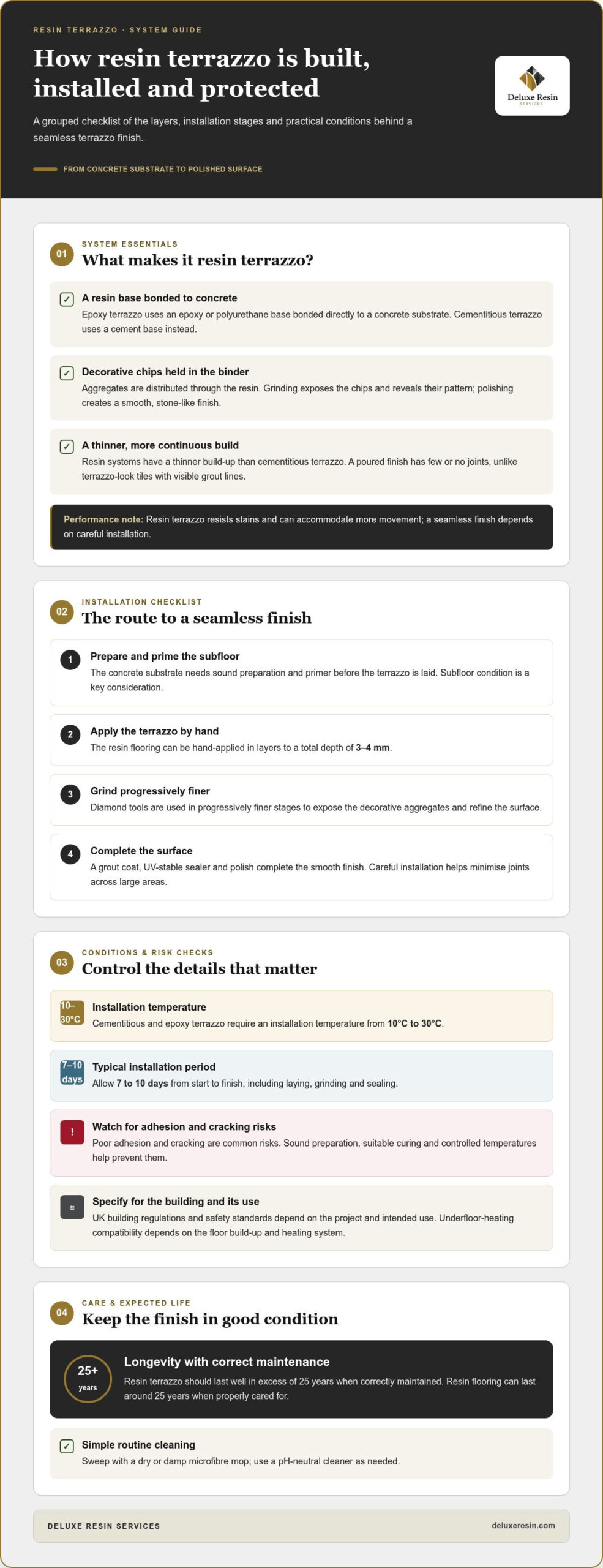
Epoxy terrazzo flooring system structure
Terrazzo effect resin flooring can use epoxy or polyurethane as its resin base. Unlike cement terrazzo, the resin binder bonds directly to the concrete substrate, creating a thinner flooring system. This structure defines epoxy terrazzo, with decorative aggregates exposed in the polished finish.
Think of the system as a sequence of functional layers. The concrete substrate supports the floor, the resin base binds the aggregate, and the finished surface is ground and sealed. Each part has a clear role: the substrate provides the foundation, the binder holds the chips, and grinding reveals their pattern. The specification should reflect the building’s use and the finish required.
Epoxy terrazzo is one resin-based option; polyurethane resin is another. Both can hold decorative marble chips, while the binder and chosen aggregate affect the final appearance. Bespoke resin terrazzo can be made to a customer’s specification, so the design can suit its intended setting. When comparing terrazzo effect resin flooring options, consider the complete system and installation requirements, not just the colour.
Cement terrazzo uses a cement base, while epoxy terrazzo bonds its resin base to concrete. This difference matters when floor build-up and substrate are important design considerations. Resin terrazzo can be laid as a continuous surface over a large area, with few or no joints. Its thinner structure distinguishes it from cement terrazzo, but the right system still depends on the project specification.
To assess durability, consider the complete system: substrate preparation, resin type, aggregate, grinding and sealing. Matching these elements to the floor’s purpose helps define a suitable specification for terrazzo effect resin flooring, whether you prioritise a seamless appearance or a bespoke decorative surface.
Deluxe Resin Services: Domestic Resin Flooring
Deluxe Resin Services installs Domestic Resin Flooring for homeowners planning a renovation or new interior scheme. If you’re comparing a terrazzo-inspired finish with other resin options, start with the room’s use, the appearance you want and the floor’s everyday demands.
Its Sustainable Resin Solutions are formulated with up to 85 % renewable, plant-based materials and hold certifications such as EMICODE EC1 PLUS® and Cradle to Cradle. These options can help align material choices with environmental priorities, alongside practical requirements for the space.
Share your project goals with Deluxe Resin Services to discuss the flooring approach that suits your home. You’re welcome to contact Deluxe Resin Services to take the next step.
Take the next step towards the right resin floor
Choosing terrazzo effect resin flooring is an opportunity to shape how a space looks and functions over time. Consider how the room is used, the finish you want and the practical demands of daily life. These priorities help you decide whether the system suits your project.
Deluxe Resin Services installs Domestic Resin Flooring and Industrial Resin Flooring, as well as Resin Driveways. Share the intended setting and your design aims to discuss a suitable flooring approach, including whether terrazzo effect resin flooring fits your plans.
Contact Deluxe Resin Services to discuss your project and take a confident next step towards a considered flooring choice.
Frequently Asked Questions
What is Epoxy Terrazzo?
Epoxy terrazzo is a decorative flooring system in which epoxy resin binds stone or glass aggregates over a concrete substrate. The exposed chips create a polished finish, while the resin base distinguishes it from cement-based terrazzo. Its thin build-up can suit projects where floor depth matters, but substrate condition and intended use remain important when specifying the system.
What is terrazzo effect resin flooring and how is it made?
Terrazzo effect resin flooring is a continuous resin surface with decorative chips visible in the finish. Installers prepare the substrate, apply the resin and aggregate, then grind and seal the surface. The chip material, colour and distribution shape the result. For example, a design could combine marble fragments with mirrored glass for a more reflective appearance.
How durable, slip-resistant and easy to maintain is terrazzo effect resin flooring?
Performance depends on the resin system, installation and care. Resin terrazzo resists stains, and resin flooring can be specified with customised anti-slip properties. For routine cleaning, remove loose dirt with a dry or damp microfibre mop, and use a pH-neutral cleaner as needed. Avoid abrasive methods that could affect the polished surface or protective finish.
How do you choose a UK installer for terrazzo effect resin flooring?
Choose an installer who can explain the resin system, substrate preparation, aggregate selection and finishing sequence clearly. The specification should suit the room’s use and address the desired slip resistance and maintenance needs. Deluxe Resin Services installs domestic and commercial resin flooring; discuss your project and the suitable flooring approach with the team.