

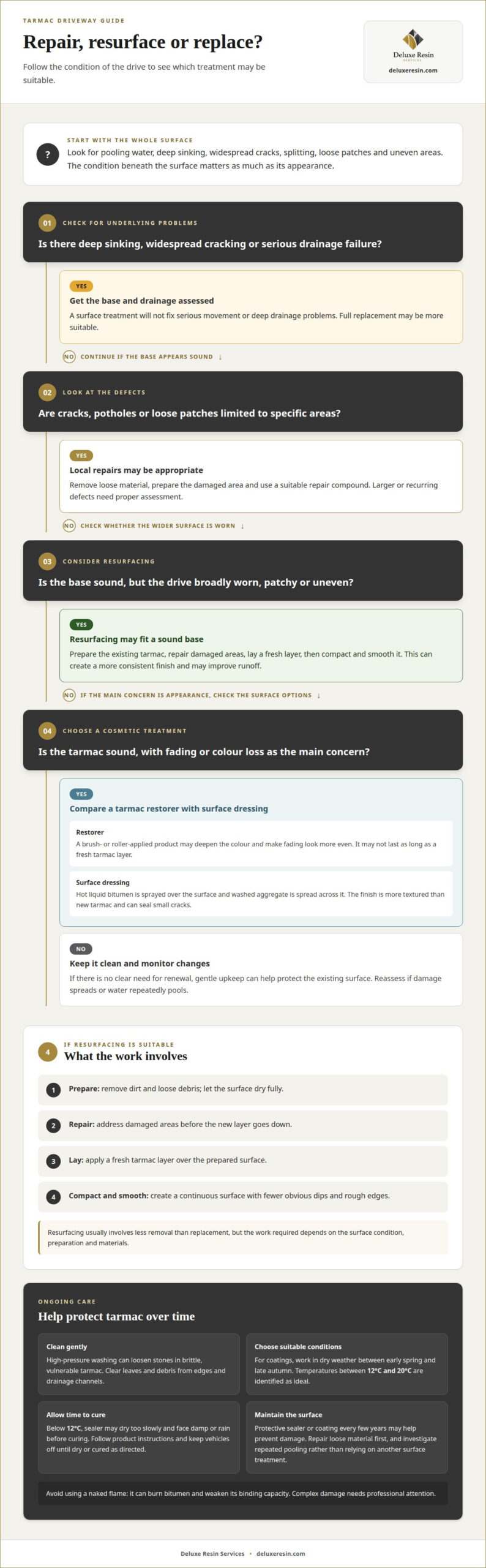
A worn-looking tarmac drive doesn’t automatically need to be dug up. If you’re deciding what to do with a tired tarmac drive, resurfacing may work when the existing surface is still structurally sound: damaged areas are repaired, a fresh tarmac layer is laid, then compacted and smoothed. Deep sinking, widespread cracking or serious drainage problems may mean full replacement is more suitable.
Fading, loose patches and uneven areas can make a driveway look neglected, but the right fix depends on the condition beneath the surface. A fresh layer can renew the appearance and may extend the life of the existing drive.
This guide explains what resurfacing involves, how to spot signs that repairs or replacement may be needed, and what can help protect tarmac over time. Use these points to compare options and choose a practical next step.
Key Takeaways
- Check for deep sinking, widespread cracks and drainage problems, as these may point to underlying issues rather than a surface ready for resurfacing.
- Resurfacing involves preparing the drive, repairing damaged areas, laying a fresh tarmac layer and compacting it smooth.
- A renewed surface can refresh the driveway’s appearance, while careful preparation can also help reduce puddling.
- If you’re considering a different surface, explore resin driveways and sustainable resin solutions from Deluxe Resin Services.
What Is Driveway Resurfacing?
Resurfacing means preparing the existing tarmac, repairing damaged areas, then laying and compacting a fresh layer. It suits a sound base, not a drive affected by serious movement below the surface.
Assessing restoration suitability
Look for pooling water, deep sinking, widespread cracks, splitting, loose patches and uneven areas. These may indicate drainage or structural problems that a surface treatment won’t fix. An assessment of the base can help establish whether local repairs, resurfacing or replacement is appropriate.
Start restoration by removing dirt and loose debris. Treat green growth a few days before washing, then let the surface dry fully before applying a coating. Some tarmac-restoration products can be brushed or rolled on, but follow the product instructions. They may refresh the colour, though surface treatments may not last as long as resurfacing.
Repairs, drainage and surface options
For cracks or potholes, remove loose material, prepare the damaged area and use a suitable repair compound. Larger or recurring defects need proper assessment. Avoid high-pressure washing on brittle, vulnerable tarmac, as it can loosen stones. Keep vehicles off restored tarmac until the treatment has dried or cured as directed.
When planning an impermeable replacement surface, consider where rainwater will drain. Requirements depend on the site and location. Scottish Government guidance says tarmac on an accessible route should be profiled to avoid standing water. Resurfacing can improve runoff, but deep drainage failure may require more extensive work.
Resin or block paving needs a stable, suitably prepared base, so covering damaged tarmac alone isn’t a reliable fix. Resurfacing usually involves less removal than replacement, but the work required depends on the surface condition, preparation and materials. DIY repairs can result in poor bonding or uneven levels. A naked flame can burn bitumen and weaken its binding capacity, so complex damage needs professional attention.
Appearance improvements from resurfacing
A fresh tarmac layer can give a weathered drive a darker, more consistent finish. Sunlight and regular vehicle traffic can fade the colour and wear the surface, making older patches look different from newer repairs. Resurfacing can create a more unified appearance than isolated touch-ups, which may stand out.
Preparation affects the final appearance. Loose material and damaged sections need attention before the new layer goes down, or uneven areas may remain visible. The tarmac is then compacted and smoothed to create a continuous surface with fewer obvious dips, rough edges and patchwork marks. The result depends on the condition and shape of the existing drive.
Surface dressing is another way to refresh worn tarmac. It involves spraying hot liquid bitumen over the surface and spreading washed aggregate across it. The result is more textured than a smooth new tarmac layer. It can seal small cracks and provide a durable, slip-resistant finish. Choose based on the appearance and treatment the surface needs.
A tarmac restorer applied with a brush or roller can deepen the colour and make a faded drive look more even. However, these products may not last as long as a fresh tarmac layer, so they are not an equivalent replacement. Assess the whole drive rather than focusing on one faded patch. Consider how repairs, edges and the finish will look together, especially where the driveway meets paths or paving.
Preparing and resurfacing an older tarmac driveway can improve water runoff and reduce puddling and standing water. Resurfacing may suit an ageing drive, but major structural instability, deep sinking, widespread cracking or significant drainage failure beneath the surface can indicate that full replacement is needed.
Extending the life of an existing driveway
Daily traffic, rain, frost and sunlight gradually wear tarmac. Water entering small cracks can widen the damage, while prolonged sun exposure may dry the surface, fade its colour and contribute to cracks or holes. If you’re deciding what to do with a tired tarmac drive, note where deterioration appears and whether it is spreading.
Use gentle cleaning on older, brittle tarmac. High-pressure washing can loosen stones and worsen vulnerable areas, so choose a less forceful method. Clear leaves and debris from the edges and drainage channels too. If water repeatedly pools, the underlying level or runoff route may need attention rather than another surface treatment.
For protective coatings, work in dry weather between early spring and late autumn. Temperatures between 12 and 20 degrees are identified as ideal for tarmac restoration. Below 12 degrees, sealer may dry too slowly and face damp or rain before curing. Follow the product instructions and keep vehicles off until the coating has dried or cured as directed.
Apply protective sealer or coating every few years to help prevent damage. A sound, clean and fully dry surface supports better application, while repairs should address loose material first. The right response to what to do with a tired tarmac drive depends on whether the surface needs upkeep or more extensive renewal. If you’re considering a different finish, compare alternative driveway surface options as part of planning its renewal.
Water pooling, surface cracks, splitting, fading, loose areas and unevenness are signs that an ageing tarmac driveway may need attention. One tradesperson advises that tarmac is porous and can soften when exposed to sunlight. Excessive sunlight can dry out tarmac, causing colour loss and, if it dries out too much, cracks and holes. In the repair example, the tarmac driveway was 18 months old. A suggested way to lift its sunken tarmac section was to cut out a 2×2 square.
Deluxe Resin Services: Domestic Resin Flooring
Deluxe Resin Services installs resin driveways as an alternative for homeowners considering a different finish from tarmac. A resin-bound surface offers a fresh look for the approach to your home, while Sustainable Resin Solutions can suit projects where material sourcing is a priority.
The right option depends on the surface you want and the condition of the area being renewed. Deluxe Resin Services’ products are formulated with up to 85% renewable, plant-based materials and hold certifications including EMICODE EC1 PLUS® and Cradle to Cradle. These details offer useful context when comparing driveway materials, alongside appearance and the needs of your property.
To discuss resin driveway options and the finish you have in mind, contact Deluxe Resin Services for a tailored quote.
Choose a surface that suits your next plans
Deciding what to do with a tired tarmac drive can prompt a wider look at the surfaces around your property. Consider how the driveway should complement your home, how you use the space, and whether you want to move beyond a traditional finish. Knowing your priorities will make the next conversation more focused.
Deluxe Resin Services installs resin driveways, as well as Domestic Resin Flooring and Industrial Resin Flooring. If you’re considering resin as an alternative to tarmac, discuss your project and preferred finish with the team.
Contact Deluxe Resin Services to discuss your driveway and take a considered step towards a surface that suits your home.
Frequently Asked Questions
How do I assess whether a tired tarmac driveway needs repair or replacement?
Consider how far the damage extends and whether it returns after repairs. After rain, note where water collects and whether the tarmac is also sinking or breaking apart. An isolated pothole may need a local repair, while recurring defects in several areas, widespread movement or persistent pooling suggest the underlying surface needs a fuller assessment.
What are the steps to clean and seal an old tarmac driveway?
Treat green growth a few days before cleaning, then remove loose debris and wash gently. Let the tarmac dry fully before sealing, and complete any necessary repairs first. Apply at least two coats of a quality tarmac sealer or coating, following the product’s instructions for application and drying. Keep cars off until the treatment has dried or cured as directed.