
The right flooring solutions for high-traffic areas depend on more than how hard-wearing a surface sounds. A floor must suit the way a space is used, while keeping safety, cleaning and appearance manageable. A busy hallway at home and a commercial circulation area may both see frequent footfall, but they can have different demands.
This guide shows how to compare flooring requirements, from traffic and slip resistance to cleaning, the existing surface and the finish you want. It explains where seamless resin flooring may fit and why preparation and finishing matter. Use the checks below to build a practical brief for a domestic, commercial or industrial project.
Key Takeaways
- High traffic means frequent use, but a busy home hallway and a commercial circulation area may have different flooring demands.
- Compare flooring solutions for high-traffic areas by considering traffic, safety, cleaning, the existing surface and the finish you want.
- A seamless resin floor may suit a busy space when its properties are matched to how the area is used.
- Substrate assessment, surface preparation, installation and ongoing care all contribute to a considered flooring project.
What Makes Flooring a High-Traffic Solution? Start with How the Space Is Used
High-traffic flooring is chosen to cope with frequent use, but the right performance depends on what happens in the space. A home hallway may collect outdoor dirt and need regular cleaning. A commercial circulation area may also have wheeled movement, concentrated periods of use or specific operational demands. These spaces should not be treated as if they face identical conditions.
Start with how the space is used, not a generic product ranking. This makes it easier to compare flooring solutions for high-traffic areas against real conditions instead of relying on a broad label such as “durable”.
Which parts of a space place the greatest demands on a floor?
Entrances, corridors, shared areas and workspaces can all be busy, but their traffic patterns differ. An entrance may regularly encounter grit and moisture; a corridor may see repeated movement along the same route. In a workspace, equipment on wheels affects the floor differently from people walking across it. Consider these demands alongside the appearance you want to maintain.
Before comparing materials, note:
- How often people use the area and whether movement follows particular routes.
- Whether wheeled equipment or other loads travel across the surface.
- How the floor will be cleaned and how it should look between cleans.
- Whether slip resistance is a priority in the space’s actual conditions.
Material types also differ. Vinyl Composition Tile (VCT) is one established option for busy spaces. Compare its separate-tile layout with the continuous finish of resin, as well as the cleaning routine and project requirements for each. For residential interiors, the domestic resin flooring guide explains how resin can provide a considered finish for the home.
How to Assess Flooring Solutions for High-Traffic Areas
Turn general requirements into a clear project brief. Describe how the space operates, what the floor encounters and which qualities matter most. Frequent pedestrian use differs from wheeled loads or industrial activity, so a single description such as “heavy duty” is not enough to compare options.
A useful flooring brief sets out how the space is used and which performance priorities matter most. This gives you a practical way to assess flooring solutions for high-traffic areas, including whether a seamless resin finish is suitable for the setting.
What should a high-traffic flooring brief include?
Record the site conditions and everyday demands before choosing a finish. A seamless resin surface may suit a project where continuity and practical cleaning are priorities. Its suitability still depends on the substrate and the space’s actual use, so include both in the assessment.
- Traffic: Describe whether the area sees pedestrians, wheeled movement, industrial activity or a combination.
- Safety: Consider the conditions people encounter, including whether the floor may be wet or affected by materials used in the space. Non-slip performance should suit the actual environment, not just a general claim.
- Cleaning: Note the cleaning routine, products and frequency needed to keep the surface presentable.
- Substrate and finish: Record the existing floor’s condition and the appearance you want, such as a clean, continuous finish.
These priorities differ between domestic and industrial projects. A workspace with equipment and operational demands needs a different assessment from a home interior. The industrial resin flooring guide explores the context for those projects. Deluxe Resin Services installs resin floors with project-based preparation and finishing. Explore tailored resin flooring solutions for your space.
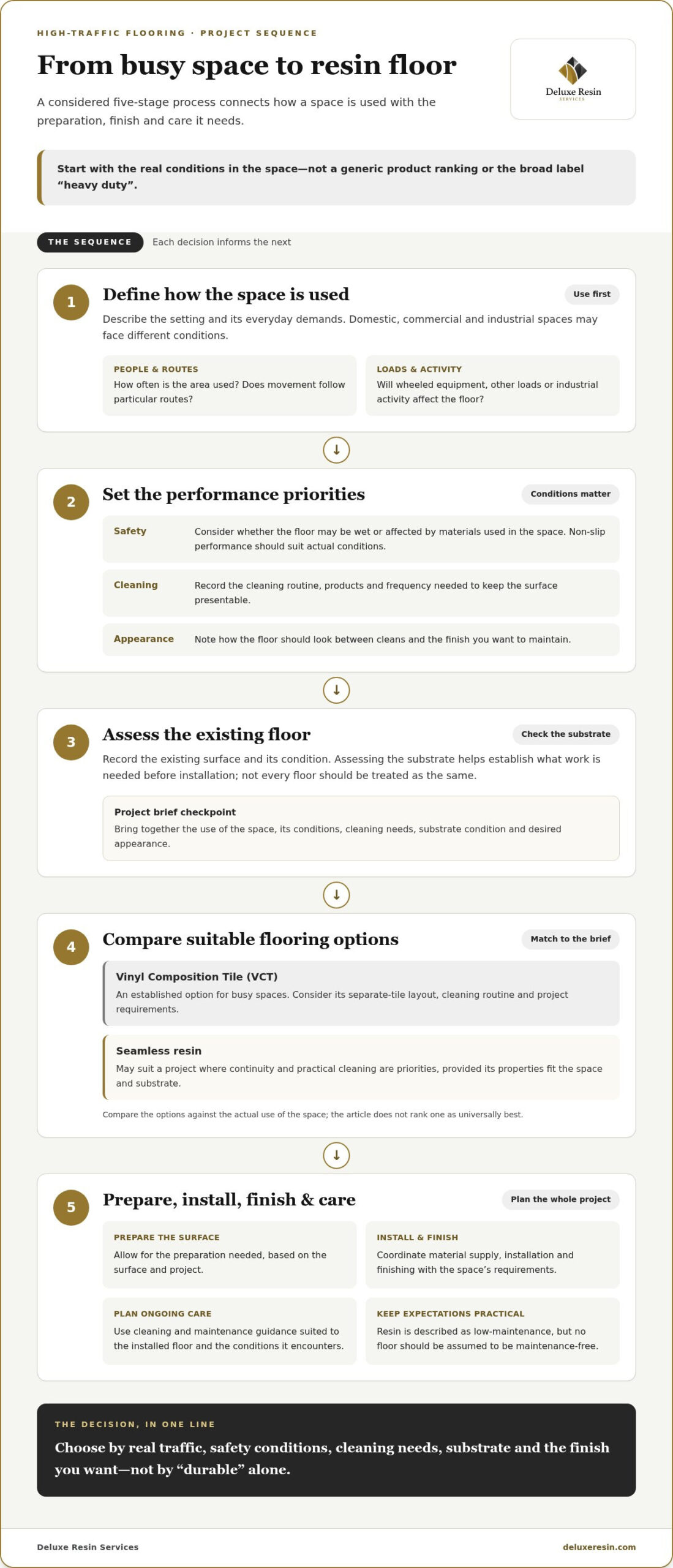
When Resin Flooring Fits a Busy Space: From Preparation to Ongoing Care
Resin flooring may fit a busy space when its seamless finish, non-slip properties and practical upkeep suit the way the area is used. The choice of surface is only one part of the project. The existing floor, preparation and suitable aftercare also matter. Deluxe Resin Services installs resin flooring for domestic and commercial spaces, with project-based site preparation, material supply and finishing.
How do preparation and maintenance support a resin flooring project?
Preparation depends on the surface and the project. Assessing the substrate helps establish what work is needed before installation, rather than treating every floor as the same. Resin flooring is a low-maintenance option, but it still needs appropriate routine care. Follow guidance suited to the installed floor and the conditions it encounters; no floor should be assumed to be maintenance-free.
A clear project sequence keeps decisions connected:
- Define the use: Set out the traffic, working conditions and appearance priorities.
- Assess the substrate: Include the existing surface and its condition in the project plan.
- Prepare the surface: Allow for the preparation needed before the resin is applied.
- Install and finish: Coordinate material supply, installation and finishing with the requirements of the space.
- Plan ongoing care: Use suitable cleaning and maintenance guidance to support the floor’s appearance and day-to-day performance.
This process helps establish whether resin belongs among the flooring solutions for high-traffic areas under consideration. Durability and easy cleaning do not replace project-specific planning. For practical aftercare details, the resin floor maintenance guide explains how to care for a seamless surface. To explore an option for your space, view Deluxe Resin flooring solutions.
Choose a Floor That Works for Your Space
Turn your priorities into a flooring brief based on how the space operates. The right flooring solutions for high-traffic areas should meet everyday demands while maintaining the finish you want, whether the project is domestic, commercial or industrial.
Deluxe Resin Services installs resin flooring for these settings. Its formulations use up to 85% renewable, plant-based materials and hold certifications including EMICODE EC1 PLUS® and Cradle to Cradle, adding a sustainability consideration to your project.
Plan a surface that brings function and appearance together. Explore resin flooring solutions for your project and take the next step towards a floor tailored to your space.
Frequently Asked Questions
Is resin flooring suitable for high-traffic areas?
Resin flooring can suit busy spaces when the system and finish match the activity. A pedestrian route, for example, has different demands from an area crossed by equipment. Consider intended use, cleaning needs and safety requirements together to decide whether resin is an appropriate option among flooring solutions for high-traffic areas.
Can resin flooring be used in both homes and commercial spaces?
Yes. Resin flooring is installed in domestic, commercial and industrial settings. A home may prioritise a refined finish that works with the interior, while a commercial project may have operational requirements to consider. Choose according to how each space functions rather than assuming one specification or appearance will suit every setting.
How do you maintain a resin floor in a busy space?
Follow care guidance suited to the installed floor and the conditions it faces. Remove loose dirt regularly so it is not tracked across the surface, and clean spills using the recommended method. Not every cleaning product is suitable. A consistent routine can help keep the floor presentable, with the right approach depending on the project and its use.
What does seamless resin flooring mean?
Seamless resin flooring is applied as a continuous surface rather than assembled from separate tiles or boards, leaving fewer joints across the main floor area. This creates a cohesive appearance and can make routine cleaning more straightforward. The finished result also depends on the project, including edges, transitions and the condition of the underlying surface.