

Did you know that a single square metre of high-quality resin-bound surfacing can process over 850 litres of water every minute? For many UK homeowners, heavy rain often leads to the frustrating sight of standing puddles and the persistent worry of water damage or structural cracking. You likely want an entrance that looks pristine whilst effortlessly managing the unpredictable British weather. In this guide, we’ll explore the primary resin driveway drainage benefits, showing how this advanced technology prevents flooding and protects your property’s integrity. You’ll discover how permeable systems simplify planning permission by meeting SuDS regulations, often removing the need for expensive additional drainage channels. We’ll also explain the vital role of the specialised sub-base in creating a long-lasting, eco-friendly surface that remains stable, porous, and beautiful for years to come.
Key Takeaways
- Understand how the “interconnected void” structure of resin-bound systems allows for rapid water filtration, distinguishing it from non-permeable alternatives.
- Learn how to eliminate standing water and puddles, protecting your property’s footings from damp whilst reducing the risk of ice patches in winter.
- Discover the resin driveway drainage benefits that ensure SuDS compliance, typically allowing for installation without the requirement for formal planning permission.
- Explore how the synergy between a porous sub-base and a permeable surface prevents freeze-thaw cracking and preserves the long-term structural integrity of your driveway.
The Science of Permeability: How Resin-Bound Systems Manage Surface Water
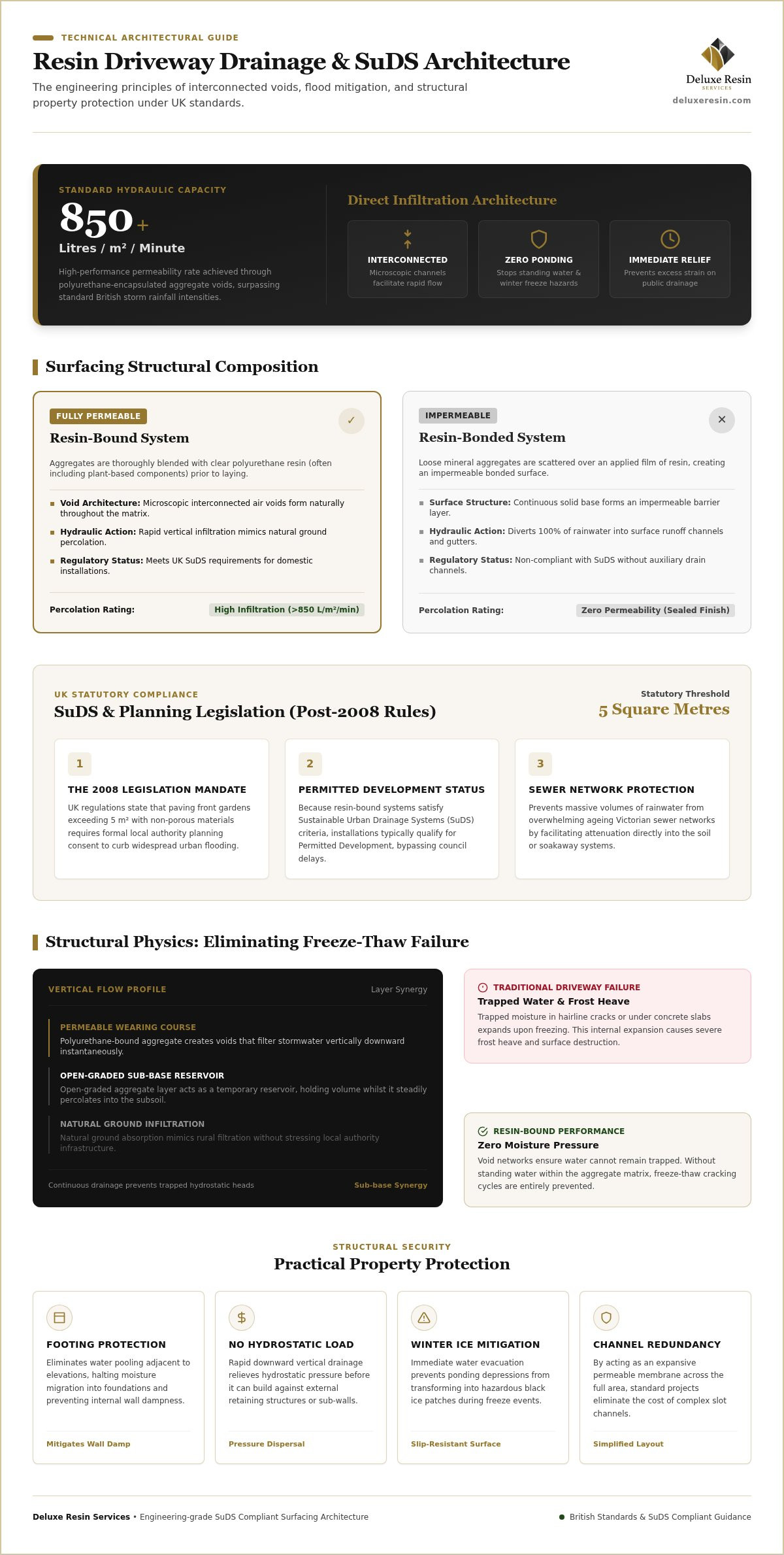
To understand how these surfaces perform, we must distinguish between resin-bonded and resin-bound systems. Resin-bonded surfacing involves scattering loose aggregate over a thin layer of resin, creating a sealed, impermeable finish. In contrast, resin-bound technology involves mixing high-quality aggregates with clear polyurethane resin, often formulated with sustainable plant-based materials, before installation. This process ensures every stone is fully encapsulated, creating a network of tiny, interconnected voids.
These microscopic channels transform the driveway into a sophisticated drainage solution. Water doesn’t sit on the surface; instead, it filters through at a remarkable rate, often exceeding 850 litres per square metre per minute. This efficiency is a hallmark of permeable paving systems, which are designed to mimic natural ground percolation. By facilitating rapid infiltration, these surfaces provide significant resin driveway drainage benefits, keeping your property dry even during intense downpours.
Understanding SUDS Compliance and Why It Matters
Sustainable Urban Drainage Systems (SUDS) are essential for managing the environmental impact of modern construction. As urban areas expand, traditional non-porous surfaces direct massive volumes of rainwater into the UK’s ageing Victorian sewer networks, often causing flash flooding. Resin-bound systems act as a natural filter, attenuating water flow and allowing it to soak into the ground or a dedicated soakaway rather than overwhelming public infrastructure. SUDS is a mandatory framework for modern UK driveway installations designed to mitigate flood risks and manage surface water responsibly. By choosing a compliant system, you contribute to local flood prevention whilst securing the long-term resin driveway drainage benefits that protect your property.
Protecting Your Property: The Practical Advantages of Efficient Drainage
Beyond the technical specifications, the practical resin driveway drainage benefits provide immediate peace of mind for property owners. Traditional surfaces often suffer from “ponding”, where water collects in uneven depressions and creates unsightly messes. During the colder months, these puddles transform into dangerous ice patches, creating a significant slip hazard for pedestrians. A permeable resin-bound system ensures that surface water vanishes instantly, maintaining a safe, dry, and slip-resistant environment for your family and vehicles throughout the year.
This efficient water management also safeguards your home’s foundations and structural integrity. When water is allowed to pool against a building, it can eventually migrate into the footings or cause persistent damp issues within the internal walls. By facilitating rapid vertical drainage, resin-bound technology prevents hydrostatic pressure from building up against the property’s structure. It’s a proactive, high-performance solution that protects the long-term value and health of your domestic or commercial property.
Simplifying the Planning Process for UK Homeowners
Since the legislation changes in 2008, homeowners paving over five square metres of a front garden must adhere to strict drainage rules. Choosing a SuDS-compliant resin system removes this hurdle, as it qualifies for Permitted Development. Following government guidance on permeable surfacing ensures your project remains lawful whilst avoiding the expense and delay of local authority approvals. By partnering with professional resin bound driveway installers UK, you can navigate these regulations with ease. It’s a streamlined approach that prioritises both aesthetic appeal and environmental responsibility. You can contact our expert team to discuss a tailored, compliant solution for your property.
Long-Term Structural Integrity: How Drainage Prevents Driveway Failure
Traditional driveways often fail due to the destructive freeze-thaw cycle. When water becomes trapped within hairline cracks in tarmac or beneath concrete slabs, it expands as it freezes. This creates immense internal pressure, leading to frost heave and surface cracking. One of the most significant resin driveway drainage benefits is the elimination of this pressure. By allowing water to flow freely through the aggregate, the system prevents the accumulation of moisture that causes structural failure.
This performance depends on a synergy between the surface and a porous sub-base. An open-graded aggregate layer acts as a temporary reservoir, holding water whilst it slowly percolates into the natural ground. As noted in this EPA overview of permeable pavement, these systems are vital for capturing stormwater at the source and reducing stress on municipal infrastructure. It’s a method that prioritises longevity over temporary fixes.
Sustainable Surfacing and the Deluxe Resin Difference
At Deluxe Resin, we enhance this durability by utilising plant-based materials. Our bio-based resin floor installation technology offers superior flexibility compared to traditional oil-based alternatives. This natural elasticity allows the surface to adapt to minor ground movements without cracking. It ensures the finish remains resilient whilst upholding our commitment to Cradle to Cradle certified standards. These eco-friendly materials allow the ground to breathe, maintaining a healthy soil ecosystem beneath your property.
To preserve these benefits, simple maintenance is required. Regularly removing organic debris and occasional pressure washing prevents the interconnected voids from clogging. This ensures the resin driveway drainage benefits remain effective for decades, providing a stable, high-performance entrance that respects the environment.
Investing in a Resilient and Sustainable Entrance
Choosing a permeable surface is more than just a regulatory necessity; it’s a commitment to your property’s longevity. By harnessing interconnected voids, you secure comprehensive resin driveway drainage benefits that eliminate standing water and prevent structural failure. This technology ensures your home remains safe from damp whilst supporting wider water management goals.
At Deluxe Resin, we combine national UK installation expertise with a dedication to environmental stewardship. Our systems utilise eco-friendly resins with up to 85% renewable content, alongside Cradle to Cradle and EMICODE certified products. You can request a consultation for your sustainable resin-bound driveway to see how our specialist approach can transform your home. Take the first step towards a flood-free, premium finish that stands the test of time.
Frequently Asked Questions
Do I need planning permission for a resin-bound driveway in the UK?
You don’t usually need planning permission for a resin-bound driveway because it’s a SuDS-compliant surface. Since 2008, UK regulations state that front garden paving over five square metres requires permission only if the surface is non-permeable. Because water filters directly through the resin-bound layer into the ground, it qualifies as permitted development, saving you the time and expense of a formal application.
Will a resin-bound driveway get clogged with dirt and stop draining?
While the interconnected voids are designed for high-volume filtration, they can eventually clog if silt and organic matter accumulate. You can easily maintain the resin driveway drainage benefits by sweeping away leaves and performing an annual light pressure wash. This simple routine keeps the pores open, ensuring the surface continues to manage heavy rainfall effectively without losing its premium appearance or functionality.
How much water can a resin-bound surface actually drain?
A certified resin-bound surface can drain upwards of 850 litres of water per square metre every minute. This incredible capacity far exceeds the intensity of even the most severe UK flash floods. When installed correctly with a porous MOT Type 3 sub-base, the system acts as a high-performance reservoir that prevents standing water and protects your property from the risks of localised flooding.
Is a resin-bound driveway better for the environment than block paving?
Yes, resin-bound systems offer significant ecological advantages over many traditional alternatives. While block paving can be permeable, it often relies on wide joints that can harbour weeds or require frequent maintenance to stay porous. Our sustainable solutions use Cradle to Cradle certified materials that allow rainwater to recharge the groundwater naturally. This process filters out pollutants and supports a healthier soil ecosystem than more disruptive paving methods.