

A stronger blast isn’t always a better clean. If you’re wondering how to clean a resin bound driveway without disturbing the aggregate or affecting the binder, start gently. A pressure washer, moss remover or vigorous scrubbing can do more harm than good if the method is unsuitable for your surface.
Resin bound driveways are low-maintenance, but routine care helps keep them looking their best. This guide sets out a straightforward cleaning routine, explains how to deal with leaves, moss, algae and everyday spills, and covers what to consider before using a pressure washer or cleaning product. You’ll also learn when to stop rather than risk damaging the finish.
Key Takeaways
- A permeable resin bound surface still needs routine care to remove debris and prevent build-up.
- Start with sweeping and gentle rinsing before trying any stronger cleaning method.
- Blot fresh spills and treat established marks cautiously instead of scrubbing harder.
- Avoid solvents and unverified cleaners that could affect the resin binder.
Why resin bound driveways need gentle, regular cleaning
Resin bound surfacing is made by mixing aggregate with resin before laying it, creating a textured, permeable finish. The stones are held together across the surface while water can drain through it. For a general overview of its composition and properties, see What is resin-bound paving?
Resin bound surfacing holds aggregate together throughout the surface. Loose gravel moves freely, while resin bonded surfacing has aggregate scattered over a resin-coated base. That difference matters when you clean: don’t rake a resin bound driveway like loose stone or assume it can withstand forceful scrubbing. Low-maintenance means routine care is straightforward, not that dirt, organic matter or spills cannot collect.
Regular, gentle cleaning makes it easier to remove debris before it builds up and to spot marks while they’re fresh. If you’re learning how to clean a resin bound driveway, first consider what has collected and where. The installation and system design also provide useful context; the resin bound driveway installation guide explains the surfacing in more detail.
What can build up on a resin bound driveway?
Leaves, soil, tyre marks, moss and algae are possible cleaning concerns, but they don’t automatically indicate a defect. Leaves and soil often gather in corners and along edges, while tyre marks may appear where vehicles turn or stop. In damp or shaded spots, organic debris can hold moisture against the surface and create conditions where moss or algae may develop.
Sweep away loose debris regularly, especially from edges and areas where leaves collect. After wet or windy weather, look for damp patches with trapped debris and clear them before they remain on the surface. The aim is timely care, not aggressive cleaning.
How to clean a resin bound driveway safely, step by step
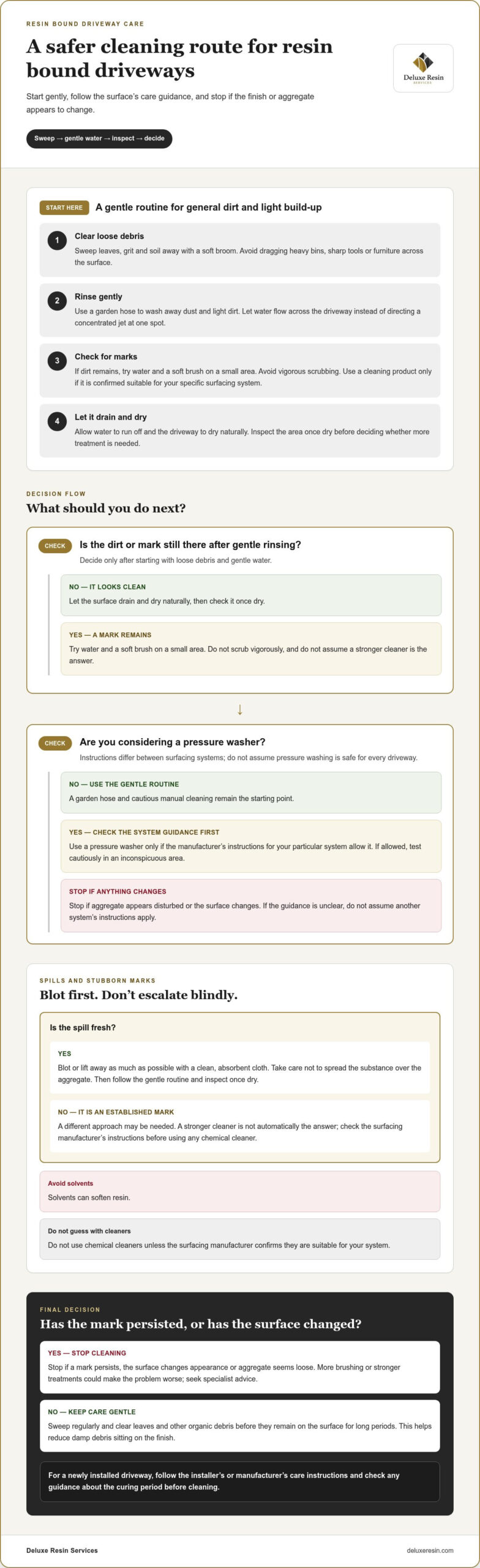
Use this routine for general dirt and light surface build-up. Work in manageable sections, and move on to a stronger method only if gentle cleaning doesn’t remove the mark. Start with loose debris and gentle water before considering stronger cleaning methods.
- Clear loose debris. Sweep leaves, grit and soil away with a soft broom. Avoid dragging heavy bins, sharp tools or furniture across the surface, as they may scratch or mark it.
- Rinse gently. Use a garden hose to wash away remaining dust and light dirt. Let the water flow across the driveway rather than directing a concentrated jet at one spot.
- Check for marks. If dirt remains, use water and a soft brush on a small area. Avoid vigorous scrubbing. Don’t apply detergent or another cleaning product unless it’s suitable for your specific surfacing system.
- Let the surface drain and dry. Allow water to run off, then let the driveway dry naturally. Check the area once dry before deciding whether any further treatment is needed.
Can you pressure wash a resin bound driveway?
Instructions can differ between surfacing systems, so don’t assume a pressure washer is safe for every resin bound driveway. Check the manufacturer’s guidance for your particular system before using one. If the guidance permits pressure washing, test cautiously in an inconspicuous area and stop if aggregate appears disturbed or the surface changes.
This cautious approach helps answer the practical question of how to clean a resin bound driveway without assuming every surface responds in the same way. For more context on professionally installed resin bound driveway options, explore the driveway information.
How to treat stains and prevent resin bound surface damage
Deal with spills promptly, but don’t scrub hard. Blot or lift away as much as possible with a clean, absorbent cloth, taking care not to spread the substance over the aggregate. Then follow the gentle cleaning routine above and inspect the area after it has dried.
An established stain may need a different approach, so a stronger cleaner isn’t automatically the answer. Avoid solvents, which can soften resin, and don’t use chemical cleaners unless the surfacing manufacturer confirms they’re suitable for your system. If you’re unsure, stop rather than risk changing the finish. The resin floor maintenance guide offers broader care context, but use the instructions for your outdoor surface when cleaning a driveway.
When should you seek specialist advice for a stain or build-up?
Stop cleaning if a mark persists, the surface changes appearance or aggregate seems loose. More brushing or stronger treatments could make the problem worse. Newly installed driveways may need extra protection, so follow the installer’s or manufacturer’s care instructions and check any guidance about the curing period before cleaning.
Prevention can help keep the driveway looking clean, although it can’t guarantee a stain-free surface. Sweep regularly and clear leaves and other organic debris before they remain on the surface for long periods. This reduces damp debris sitting on the finish. Knowing how to clean a resin bound driveway gently, and when to stop, helps protect the appearance of a professionally installed surface over time.
Plan for a driveway that stays looking its best
Good upkeep helps you get lasting value from your driveway. Keep the manufacturer’s care guidance to hand before trying a new cleaning method, and respond to changes in the surface rather than using increasingly forceful treatments. If you’re planning a new surface, consider the maintenance it will need as part of your decision. A professionally installed resin bound driveway is designed to be durable, permeable and low-maintenance, while still benefiting from sensible care. Deluxe Resin Services installs resin bound driveway surfacing for practical outdoor spaces. Explore professionally installed resin bound driveways and take the next step towards a surface designed for everyday use.
Frequently Asked Questions
Can you use a pressure washer on a resin bound driveway?
Use a pressure washer only if the instructions for your particular surfacing system allow it. There isn’t a universal setting that’s safe for every driveway, so don’t rely on advice intended for a different surface. If the guidance is unclear, use a garden hose and gentle manual cleaning instead. Stop immediately if washing appears to shift aggregate or alter the finish.
What is the best cleaner for a resin bound driveway?
Choose a cleaner only if the surfacing manufacturer approves it for your specific system. Water may be enough for light dirt, so a chemical product isn’t automatically necessary. If a mark remains, consider what caused it before choosing a treatment. Avoid household solvents and strong, unverified products that could affect the resin.
How often should you clean a resin bound driveway?
There’s no single cleaning interval that suits every driveway. Let visible build-up guide your routine: a sheltered entrance used by several cars may need attention sooner than a lightly used, open area. Check the surface after wet or windy weather, and deal with fresh spills promptly rather than waiting for a scheduled clean.