
Why do we continue to tolerate grout lines that refuse to stay clean, or the heart-sinking sound of a ceramic plate shattering against an unforgiving surface? You likely agree that whilst traditional tiling has been the standard for decades, homeowners are increasingly seeking better alternatives to tiled kitchen floors to escape the constant scrubbing and the winter chill of cold stone. This 2026 guide promises to show you how seamless, bio-based resin is surpassing these dated materials as the preferred choice for modern British kitchens.
We will explore how sustainable, polyurethane systems provide a hygienic, grout-free surface that works perfectly with underfloor heating. From superior indoor air quality to high-end aesthetic appeal, you’ll discover why a floor made from up to 85% renewable materials is the ultimate upgrade for your home. This transition to modern, eco-conscious materials ensures your kitchen remains a functional, beautiful, and durable centrepiece of the home for years to come.
Key Takeaways
- Identify why the “grout gap” in traditional tiling creates a hygiene trap and how seamless surfaces solve this long-term maintenance issue.
- Explore the most effective alternatives to tiled kitchen floors for 2026, focusing on the durability and bespoke aesthetics of polyurethane resin.
- Gain insights into the environmental advantages of bio-based materials that utilise up to 85% renewable, plant-based ingredients for a sustainable home.
- Learn why resin is a superior conductor for underfloor heating whilst providing essential slip resistance for high-traffic family environments.
The Evolution of Kitchen Flooring: Why Homeowners are Moving Beyond Tiles
The shift towards open-plan living has fundamentally changed how we view our homes. In many British properties, the kitchen is no longer a confined utility space; it’s a social hub that flows into dining and lounge areas. This architectural evolution has exposed the limitations of traditional materials. Whilst a comprehensive overview of flooring materials highlights the long history of ceramic and stone, these rigid surfaces often disrupt the visual harmony of a modern extension.
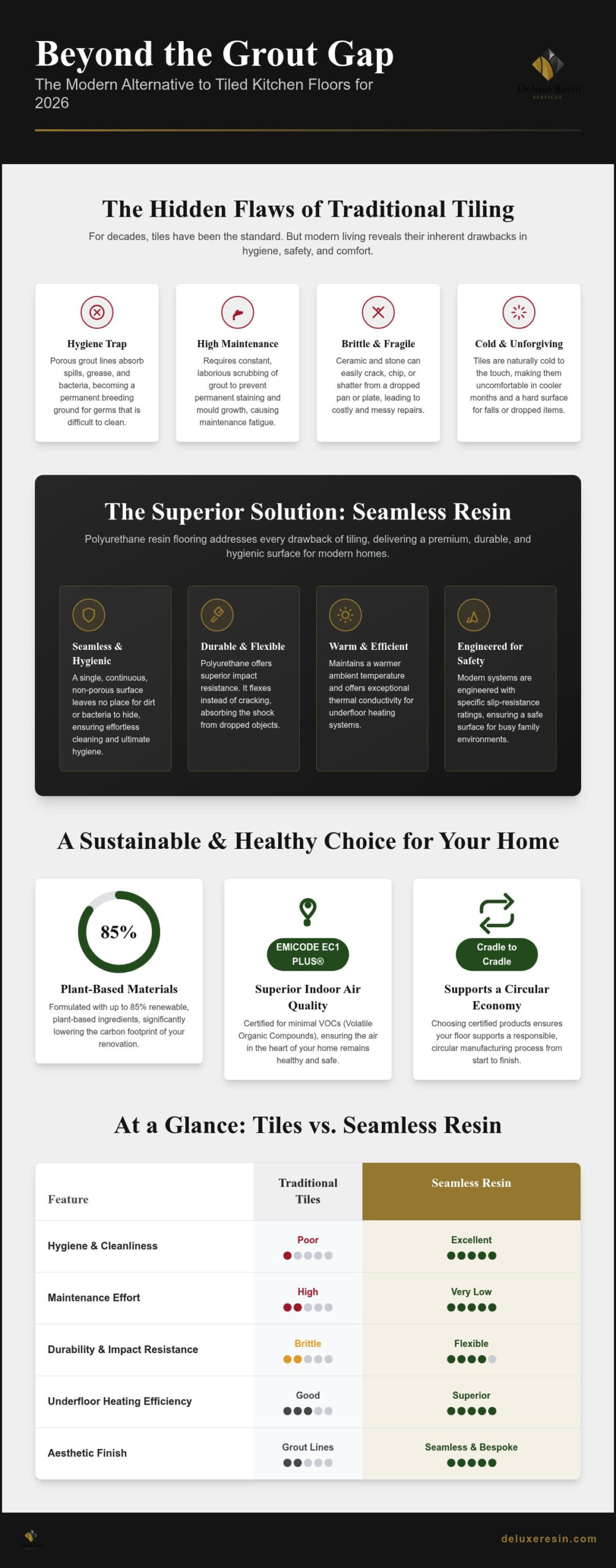
Homeowners are increasingly looking for alternatives to tiled kitchen floors to achieve a truly seamless aesthetic. Beyond looks, the “grout gap” remains a significant drawback. Grout is inherently porous, meaning it acts as a magnet for spilled wine, grease, and bacteria. There is also the issue of thermal comfort. Tiles are naturally cold underfoot, whereas resin maintains a warmer ambient temperature, making it far more comfortable during chilly British mornings.
The Problem with Traditional Ceramic and Stone Surfaces
Fragility is a constant concern in a busy kitchen environment. A single dropped heavy pan can easily crack a ceramic tile, necessitate a messy repair, or leave an unsightly chip. Polyurethane resin, by contrast, offers superior impact resistance and flexibility. Maintenance fatigue is also a driving factor for change. Instead of spending hours on your hands and knees scrubbing lines amongst your furniture, a seamless surface allows for effortless cleaning with a simple mop. It’s a practical, high-end solution for those who value both safety and style.
Top Alternatives to Tiled Kitchen Floors: A 2026 Comparison
Selecting from the available alternatives to tiled kitchen floors requires balancing high-end aesthetics with technical performance. Polished concrete and microcement offer a striking industrial vibe, though they often require periodic resealing to prevent staining in high-traffic zones. Engineered hardwood provides undeniable warmth and natural beauty, yet it demands meticulous moisture management to avoid warping. For those seeking a budget-friendly option, Stone Plastic Composite (SPC) vinyl remains a popular choice due to its water resistance and realistic textures.
Seamless resin remains the premium choice for homeowners prioritising longevity and total hygiene. Unlike concrete, polyurethane resin doesn’t crack under tension, and its bespoke colour matching allows for a tailored finish that perfectly complements your cabinetry. Its non-porous, poured nature makes it an exceptionally safe and easy-to-clean option for residential spaces, providing a sleek look that tiles simply cannot replicate. To see how professional protection can maintain such high-end finishes, you can check out Sealwerx for expert insights into surface restoration.
Sustainable Resin: The Bio-Based Revolution in Kitchen Design
Modern innovation has introduced plant-based formulations that use up to 85% renewable materials. These sustainable systems significantly lower the carbon footprint of your renovation without compromising on durability or style. For health-conscious households, it’s vital to choose materials with EMICODE EC1 PLUS® certification. This standard ensures superior indoor air quality by strictly minimising volatile organic compounds (VOCs) in the heart of your home. Selecting a product with Cradle to Cradle certification further ensures your floor supports a circular, responsible economy. If you’re interested in eco-friendly design, you can explore sustainable resin flooring options that align with these rigorous environmental and safety standards.
Selecting Your Ideal Kitchen Floor: Performance and Installation
Polyurethane resin stands out amongst alternatives to tiled kitchen floors due to its exceptional thermal conductivity. Unlike timber or thick stone, resin allows heat from underfloor systems to permeate the room quickly and evenly. This efficiency ensures your living space remains energy-efficient whilst providing that sought-after warmth underfoot. Safety is equally paramount in high-traffic family areas. Modern resin systems are engineered with specific slip-resistance ratings, ensuring a sleek, high-end aesthetic doesn’t come at the cost of household security.
Maintaining this finish is remarkably straightforward. Because the surface is entirely seamless, there are no crevices for dirt or bacteria to inhabit. A routine clean with a pH-neutral solution is all that’s required to preserve the floor’s original lustre for decades. This ease of care makes resin one of the most compelling alternatives to tiled kitchen floors for busy professionals who want a premium look without the burden of intense maintenance schedules.
Professional Installation: What to Expect for Your Project
A flawless result begins with meticulous site preparation. The subfloor must be perfectly stable and dry, as any movement in the base could compromise the seamless finish. Unlike generic DIY options, professional installation involves a precise multi-stage pouring process. This craftsmanship ensures the material levels perfectly and achieves the correct non-slip texture throughout the space. It’s a methodical approach that guarantees longevity.
Vibrancy is another critical factor, especially in British homes with large bi-fold doors. We prioritise UV stability in our formulations to ensure your chosen colour doesn’t fade or yellow when exposed to direct sunlight. This technical foresight ensures that your investment remains as striking as the day it was installed, even in the brightest south-facing extensions. By choosing a specialist installer, you ensure every functional requirement is met with total precision. For readers looking for high-quality decorative solutions beyond resin, Scott Patterned Concrete offers professional expertise in creating durable and visually stunning concrete surfaces.
Transforming Your Modern Kitchen Space
Transitioning to a seamless surface represents more than an aesthetic upgrade; it’s a commitment to long-term hygiene and domestic comfort. By exploring alternatives to tiled kitchen floors, you eliminate the constant battle with porous grout whilst ensuring your home remains warm and inviting. Our bio-based resin systems offer a sophisticated solution that integrates perfectly with underfloor heating. We prioritise your household’s safety by using EMICODE EC1 PLUS® low-emission materials and Cradle to Cradle certified products. With expert national UK installation, we ensure every project reflects our pride in craftsmanship and precision. You don’t have to compromise on visual appeal to achieve a practical, eco-friendly environment. Explore our range of luxury domestic resin flooring solutions today to create a kitchen that is as durable as it is beautiful.
Frequently Asked Questions
Are resin floors better than tiles for a kitchen?
Polyurethane resin is often considered a superior choice for modern kitchens because it eliminates the hygiene issues associated with porous grout. Unlike rigid ceramic surfaces, resin provides a flexible, impact-resistant finish that won’t crack if a heavy pan is dropped. It also maintains a higher ambient temperature than stone, making it one of the most comfortable alternatives to tiled kitchen floors.
Is resin flooring slippery when wet in a kitchen environment?
Domestic resin systems are specifically engineered with slip-resistant properties to ensure safety in areas prone to spills. Whilst the finish appears sleek and polished, the texture is tailored to meet rigorous UK safety standards for residential environments. This balance of high-end aesthetics and reliable grip makes it a secure choice for busy family kitchens where water or oil splashes are common.
Can you lay resin flooring over existing kitchen tiles?
It is often possible to install resin over existing tiles, provided the subfloor is structurally sound and the tiles are firmly bonded. Our professional installation process involves grinding the surface and applying a specific primer to ensure a perfect mechanical bond. This approach can save time on site preparation, though a thorough expert assessment is required to ensure long-term stability.
How do you clean a seamless resin kitchen floor?
Cleaning a seamless resin floor is exceptionally straightforward because there are no grout lines to trap dirt or bacteria. You simply need to use a soft broom or vacuum to remove debris, followed by a damp mop with a pH-neutral cleaning solution. This low-maintenance routine preserves the floor’s lustre without the need for aggressive scrubbing required by other alternatives to tiled kitchen floors.