

What if a cracked grout line is a warning about the floor beneath it, not simply a gap to refill? Problems with grout lines in flooring can be frustrating, especially when cracks return after a repair or stains make a room look poorly maintained. The cause isn’t always obvious: tiles may be moving, or the supporting floor may need attention.
This guide explains what cracked, crumbling, discoloured or uneven grout may indicate, and what to check before choosing a repair. You’ll also learn when seamless domestic resin flooring could be an alternative to tiled joints, and why a new surface won’t resolve movement or other problems with the floor beneath.
Use the checks below to spot patterns, distinguish surface staining from damage and decide on a sensible next step.
Key Takeaways
- Problems with grout lines in flooring can be cosmetic, related to installation or linked to movement beneath the tiles. Recurring damage deserves attention.
- Map affected areas and note when cracks, gaps, crumbling or stains appeared before deciding on a repair.
- Check for changes alongside the grout, such as loose tiles or dampness. Several symptoms together can offer more useful clues than a single mark.
- Seamless domestic resin flooring has no tiled grout joints, but the underlying floor still needs to be stable and suitable.
Problems with grout lines in flooring: what cracks, gaps and stains can signal
Problems with grout lines in flooring can be cosmetic, related to installation or associated with movement beneath the tiles. Grout fills the joints between tiles, but its appearance alone can’t show exactly why it has changed. Look at the type of damage, where it appears and whether it returns after repair.
- Cracks: A fine crack may be limited to the grout. Recurring cracks are a reason to check whether the tiles or supporting floor are stable.
- Crumbling or loose material: Grout that breaks away may relate to how it was mixed, applied or cured, or to movement around the tiles.
- Gaps: Missing grout leaves an open joint. Note whether gaps are isolated or appear in several areas.
- Staining or colour changes: Surface marks may affect appearance without grout being missing. Moisture or cleaning products can also alter the colour.
- Uneven grout lines: Differences in height or width may relate to the finish or the way tiles sit. Consider them alongside other changes to the floor.
What cracked or discoloured grout may be telling you
Recurring cracks or loose grout deserve more attention than a one-off mark, particularly if a tile seems loose. Before arranging a repair, consider the stability of the tiles and the supporting floor. Grout types and uses vary, as outlined in this overview of grout, so a change in appearance can have more than one explanation.
First, distinguish a stain on intact grout from a joint where material has worn away or fallen out. Note any dampness, visible movement or colour changes, and whether the issue returned after a previous repair. A visible grout symptom is a clue, not proof of its underlying cause. Appearance alone cannot diagnose the source.
How to investigate grout-line problems before repairing the floor
A simple, non-invasive inspection can help you judge whether the problem appears isolated or may involve the tiles or floor beneath them. Don’t dig out grout or force a tile to move. Note what you can see and feel safely instead.
- Map the affected areas. Mark where cracks, gaps, loose grout or stains appear. Check whether they’re confined to one joint or spread across the room.
- Look for loose tiles. Notice whether a tile shifts or feels different underfoot. Don’t press hard or force it; record any movement you observe.
- Track changes over time. Note when the problem first appeared, whether a crack reopened after repair, and whether staining, dampness or visible movement is present.
- Separate dirt from damage. If the grout is intact and the change looks like surface staining, try a gentle cleaner labelled as suitable for the floor. Missing or crumbling material is a different issue and may need repair.
Installation factors and movement in the supporting floor can both contribute to loose or cracked grout. The Tile Council of North America outlines several causes of cracked grout. That’s why a recurring crack shouldn’t automatically be treated as a surface-only defect.
When is a grout repair enough, and when should the floor be assessed?
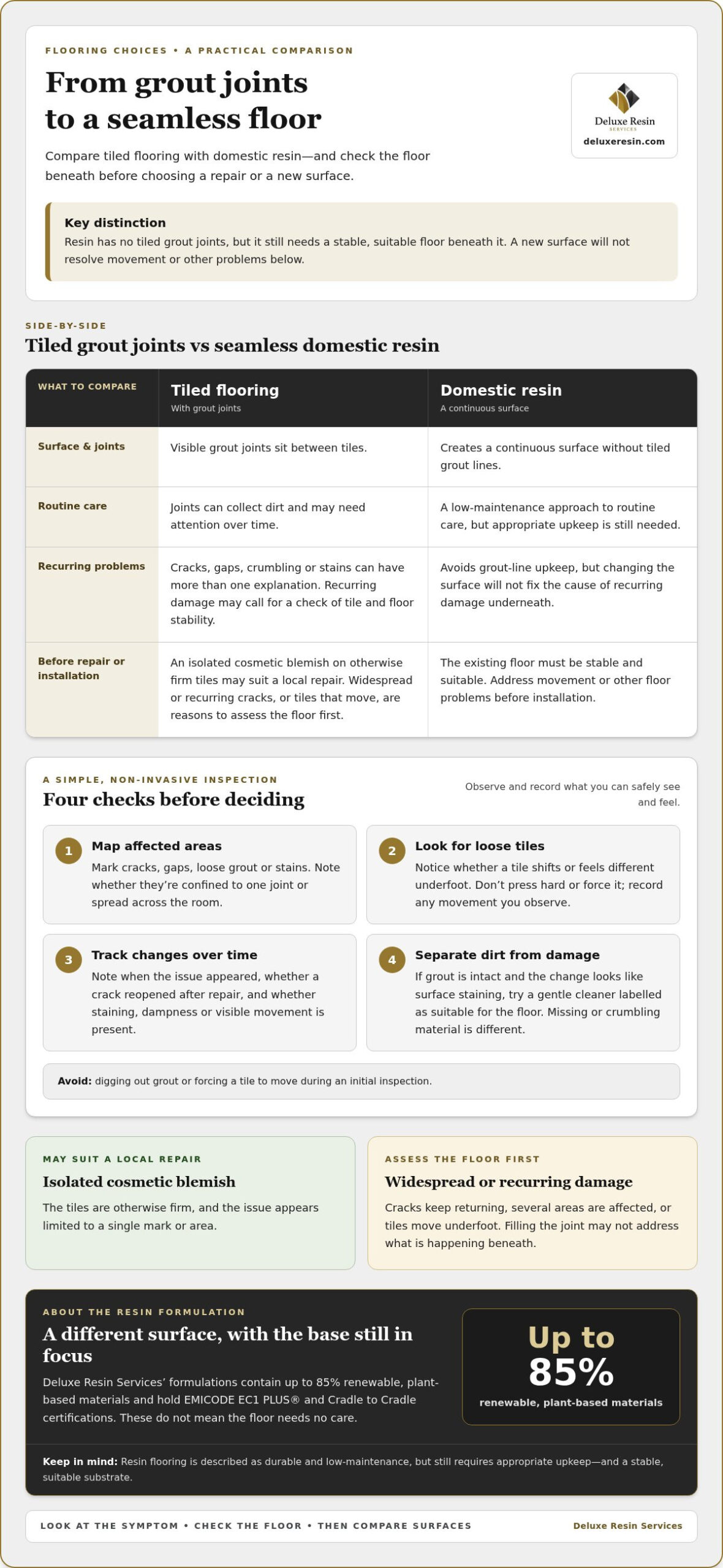
An isolated cosmetic blemish on otherwise firm tiles may be suitable for a local repair. Widespread or recurring cracks, or tiles that move underfoot, are reasons to assess the floor before filling the joint. If the same line repeatedly opens, covering it may not address what’s happening underneath. For ongoing care of a seamless surface, see this resin floor maintenance guide. If you’re considering an alternative to tiled joints, explore domestic resin flooring.
Could seamless resin flooring be an alternative to recurring grout-line upkeep?
If cleaning or repairing grout joints has become a recurring concern, a seamless floor may be worth considering. Tiled flooring has visible joints that can collect dirt and need attention over time. Domestic resin flooring creates a continuous surface without grout lines, offering a different look and a low-maintenance approach to routine care. It won’t suit every home or resolve the cause of recurring grout damage by itself.
What to consider when moving from tiles to seamless resin
Consider the finish you want, how you use the room and the condition of the existing floor. Resin can create a more uninterrupted appearance than grouted tiles, but the substrate must be stable and suitable before installation. Address underlying movement or other floor problems first: changing the surface won’t make an unsuitable base sound.
Deluxe Resin Services installs domestic resin flooring as an alternative to tiled floors with grout joints. Its resin formulations contain up to 85% renewable, plant-based materials and hold EMICODE EC1 PLUS® and Cradle to Cradle certifications. These materials and certifications don’t mean the floor needs no care. Resin flooring is durable and low-maintenance, but still requires appropriate upkeep.
For a closer look at the style and practical considerations, explore this domestic resin flooring guide. If you’re weighing up alternatives to recurring problems with grout lines in flooring, explore the resin flooring service as a next step after considering the condition of the underlying floor.
Choose a floor that suits your home for years to come
Recurring problems with grout lines in flooring can prompt a wider question: does your current floor suit the way you want to care for and use your home? Once the underlying floor is sound, weigh up the finish you prefer and the upkeep you’re prepared to do.
Deluxe Resin Services installs domestic resin flooring, creating a seamless, low-maintenance alternative to tiled grout joints. Its formulations contain up to 85% renewable, plant-based materials, giving you another option to consider alongside the look and practical needs of your space.
Ready to explore a different approach? Discover domestic resin flooring from Deluxe Resin Services and take the next step towards a floor that suits your home and everyday routine.
Frequently Asked Questions
Is cracked grout always a sign that the floor is moving?
No. A crack can result from movement, but it may also relate to how the grout was mixed, applied or cured. A single hairline crack doesn’t confirm a structural problem. With problems with grout lines in flooring, look at the wider pattern: repeated cracks, changes in neighbouring joints or a tile that shifts deserve more attention than an isolated mark.
Can I clean discoloured grout without replacing it?
Often, yes, if the grout is intact and the colour change is on its surface. Start with a cleaner labelled as suitable for your tile and grout, follow its instructions and test it on a small, inconspicuous area first. Use a soft brush rather than an abrasive tool. If the grout is missing, crumbling or remains discoloured after cleaning, cleaning alone may not be enough.
Is grout waterproof?
Grout shouldn’t be treated as a waterproof barrier. Some types resist water better than others, but water may still pass through joints, particularly if grout is cracked or deteriorated. In wet areas, protection depends on the complete installation, including suitable waterproofing beneath the tiles and sound joints. A grout sealer may help resist staining, but it doesn’t make the tiled floor waterproof.
How long should I wait before using newly grouted flooring?
Follow the grout manufacturer’s instructions, as the waiting period depends on the product and conditions during installation. Don’t assume the grout is ready just because it looks dry on the surface. Until the stated curing time has passed, avoid walking on the floor, washing it or placing heavy items on it. If you don’t have the instructions, wait until you can confirm the product’s stated curing time.