

What if the grit beneath your shoes poses a greater risk to your resin floor than everyday foot traffic? Protecting resin floors from scratches starts with simple habits: removing abrasive dirt, adding suitable protection beneath furniture and moving items carefully. A chair leg or minor mark can be concerning, but a scratch doesn’t automatically mean the floor needs replacing or recoating.
This guide explains how to prevent common household damage, clean your floor without putting its finish at risk and respond cautiously to minor marks. You’ll learn what causes scratches, how to tell them apart from scuffs and when professional assessment is appropriate. Careful installation and a suitable flooring system can support lasting performance, but no resin floor is scratch-proof.
Key Takeaways
- Distinguish a true scratch from a scuff or residue before deciding what to do next.
- Protecting resin floors from scratches starts with managing grit and taking care when moving furniture.
- Use gentle cleaning methods and avoid abrasive tools or unverified chemicals that could affect the finish.
- Seek professional assessment for visible damage rather than sanding or applying a coating yourself.
What causes scratches on resin floors, and how serious are they?
A scratch is damage to the floor’s surface, but not every mark is a scratch. Loose dirt may sit on the surface, while a scuff is often a superficial rub mark or transfer from another material. A scratch has abraded or altered the finish; deeper damage may cut through the coating or affect the layer beneath it. Identifying the difference helps you avoid treating a removable mark as a repair problem.
Grit is a common source of abrasion. Small, hard particles carried in on footwear can be pressed against the finish and dragged across it underfoot. Furniture legs may cause similar marks if an item is pulled rather than lifted, particularly when grit is trapped underneath. A dropped object can leave a localised mark or cause impact damage, so look for changes to the coating as well as discolouration.
Scratch resistance varies with the floor system, finish and how the surface is used. Resin flooring includes different materials and formulations. Understanding Epoxy Resins provides background on one common resin type used in coatings. The floor’s specification and everyday conditions both influence how wear appears.
Are resin floors scratch-proof in everyday use?
No floor finish should be treated as immune to scratching. Household activity, the selected floor system and ongoing care all affect how the surface wears over time. A faint cosmetic scuff doesn’t necessarily need repair, while visible damage that breaks or lifts the coating deserves closer assessment. Protecting resin floors from scratches begins with recognising these differences, not assuming every mark means the floor is failing.
How to protect resin floors from scratches: a simple household routine
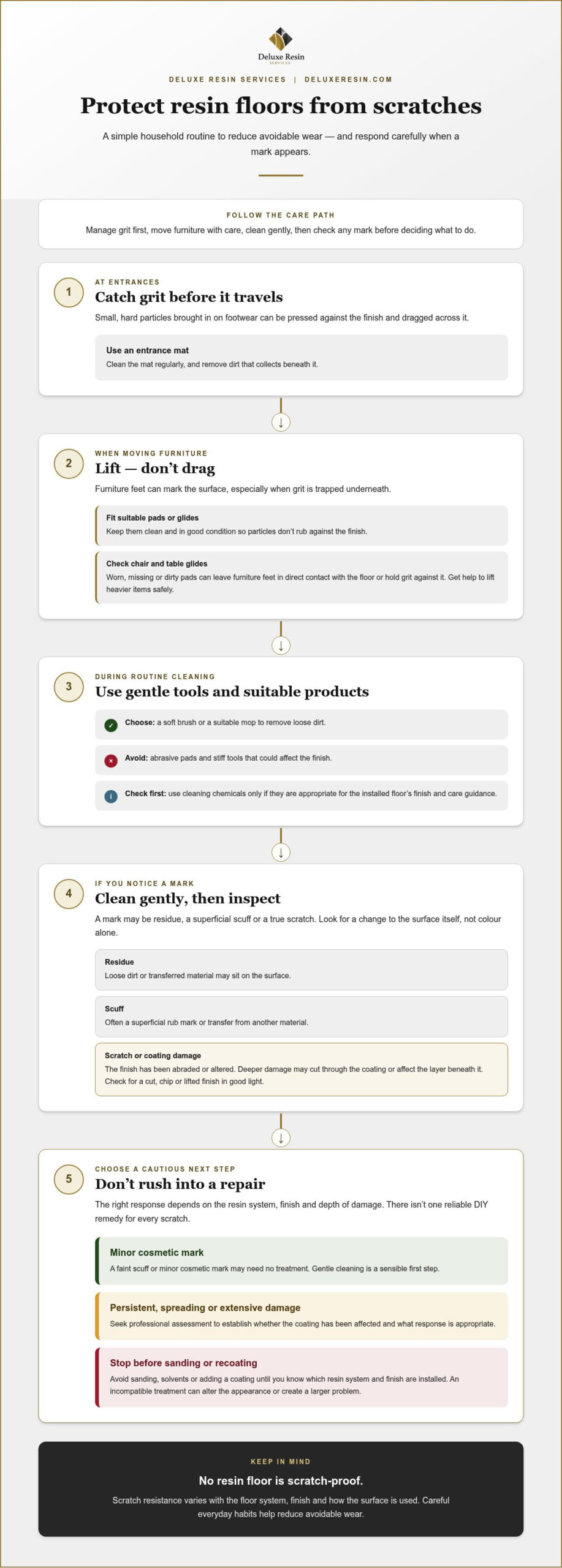
Protecting resin floors from scratches is easier when prevention becomes part of everyday care. Focus on grit at entrances, furniture movement and gentle cleaning. These three habits help reduce avoidable wear without complicated treatments.
- At entrances: Use a mat to catch grit brought in on footwear. Clean the mat regularly and remove any dirt that collects beneath it.
- When moving furniture: Lift items rather than dragging them. Fit suitable protective pads or glides, and keep them clean and in good condition so trapped particles don’t rub against the finish.
- During routine cleaning: Remove loose dirt with a soft brush or use a suitable mop. Avoid abrasive pads and stiff tools. Use cleaning chemicals only if they are appropriate for your floor’s finish.
Which furniture and cleaning habits help prevent marks?
Check chair and table glides periodically. Worn, missing or dirty pads can leave furniture feet in direct contact with the floor or hold grit against it. Before moving heavier items, get help to lift and reposition them safely instead of sliding them across the surface.
Choose a cleaning method suited to the installed system and follow its care guidance rather than experimenting with strong or unverified products. The resin floor maintenance guide offers more advice on routine care. Coating-care recommendations also emphasise regular, appropriate cleaning, as outlined in Epoxy Floor Maintenance Best Practices.
For a new surface, Deluxe Resin Services installs domestic resin flooring, with the floor system selected for the space and its everyday use.
When a resin floor is scratched: safe next steps and professional care
Pause before trying to remove a mark. First work out whether it is residue on the surface, a superficial scuff or visible damage to the coating. Clean the area gently with a method suitable for the floor, then inspect it in good light. If the mark remains, note where it is and whether the finish appears cut, chipped or lifted. A minor cosmetic mark may need no treatment, but persistent, spreading or extensive damage merits closer assessment.
- Start gently: Remove loose dirt and clean the mark with a soft brush or suitable mop.
- Look closely: Check whether the surface itself has changed, rather than relying on colour or a mark that could be transferred residue.
- Stop before treating: Avoid sanding, solvents or adding a coating until you know which resin system and finish are installed.
Can you repair a scratch in a resin floor yourself?
There isn’t one reliable DIY remedy for every scratch. The right approach depends on the resin system, finish and depth of damage; a treatment intended for one surface could alter another. Gentle cleaning is a sensible first step, but sanding or recoating can change the appearance and create a larger problem if the materials aren’t compatible. A visible mark doesn’t automatically need a new coating.
If damage remains after careful cleaning, professional assessment can help establish whether it is superficial or has affected the coating, and what response is appropriate. The same attention to system selection and workmanship matters when planning a new floor. Deluxe Resin Services installs seamless domestic resin flooring. Its domestic resin flooring guide explains considerations behind professionally installed surfaces. Informed decisions and thoughtful care help protect resin floors from scratches without risking unnecessary DIY treatment.
Choose a floor designed around your home
Planning a new floor is an opportunity to consider how each room is used and what matters most to your household. Protecting resin floors from scratches is easier to approach when the surface and its care requirements are considered as part of the wider design. A professionally installed floor can bring together a seamless finish, non-slip performance and a practical, low-maintenance surface, supported by quality craftsmanship.
Deluxe Resin Services provides professionally installed domestic resin flooring for homes. The domestic resin flooring service offers a way to explore a seamless surface designed around everyday use.
Frequently Asked Questions
Can resin floors be scratched by furniture?
Yes. Furniture can scratch a resin floor, particularly if a hard or damaged foot concentrates pressure on a small area. Castors can also leave marks if they’re worn or carry grit. Before rearranging a room, check the contact points on chairs and tables, especially where furniture is used or moved frequently.
What is the best way to clean a resin floor without scratching it?
Remove loose particles before damp cleaning so they aren’t rubbed across the surface by a mop. Use a soft brush or clean, suitable mop, and follow the care instructions for your particular floor. If you’re unsure whether a cleaning product is suitable, don’t apply it across the room; check the guidance for the installed system first.
Can you polish scratches out of a resin floor?
A suitable treatment may improve some superficial marks, but polishing isn’t a universal fix. A polishing compound or abrasive process can alter the sheen, and it may not remove a scratch that has cut into the coating. To protect resin floors from scratches, avoid experimenting with polishing products. Identify the floor finish and assess the damage first.
Do entrance mats help protect resin floors from scratches?
Yes. A well-placed entrance mat can catch some of the grit carried in on shoes before it reaches the floor. Position it where people naturally enter, and keep it clean so collected particles aren’t walked back onto the surface. Choose a mat that lies securely and doesn’t create a trip hazard or obstruct a doorway.
Explore Deluxe Resin Services’ domestic resin flooring to plan a seamless floor for your home.