

A sound concrete driveway may be resurfaced rather than removed: replacing a concrete driveway with resin can work when the slab is at least 4 inches thick and has no significant movement, deep cracks or crumbling edges. The condition of the concrete matters more than its age or appearance alone. If the base is unstable, a resin layer won’t resolve the underlying problem.
It’s understandable to want to keep a driveway that still works while giving it a refreshed finish. This guide explains how to assess the concrete, which cracks may be repairable, and why drainage and moisture matter before a resin overlay is installed.
You’ll also learn how rain, damp concrete and temperature can affect application, helping you assess whether your driveway is a suitable candidate and what to consider next.
Key Takeaways
- Look beyond surface appearance: movement, deep cracks and crumbling edges can indicate that an overlay won’t solve the driveway’s underlying problem.
- Check for trapped moisture and consider the forecast, as rain and damp conditions can affect resin adhesion and finish.
- Allow new concrete to cure fully, then ensure the surface is clean, dry and free from weak or powdery material before applying resin.
- When the slab is suitable, explore a resin driveway as a way to refresh its appearance without removing the existing concrete.
Assessing the slab’s structural condition
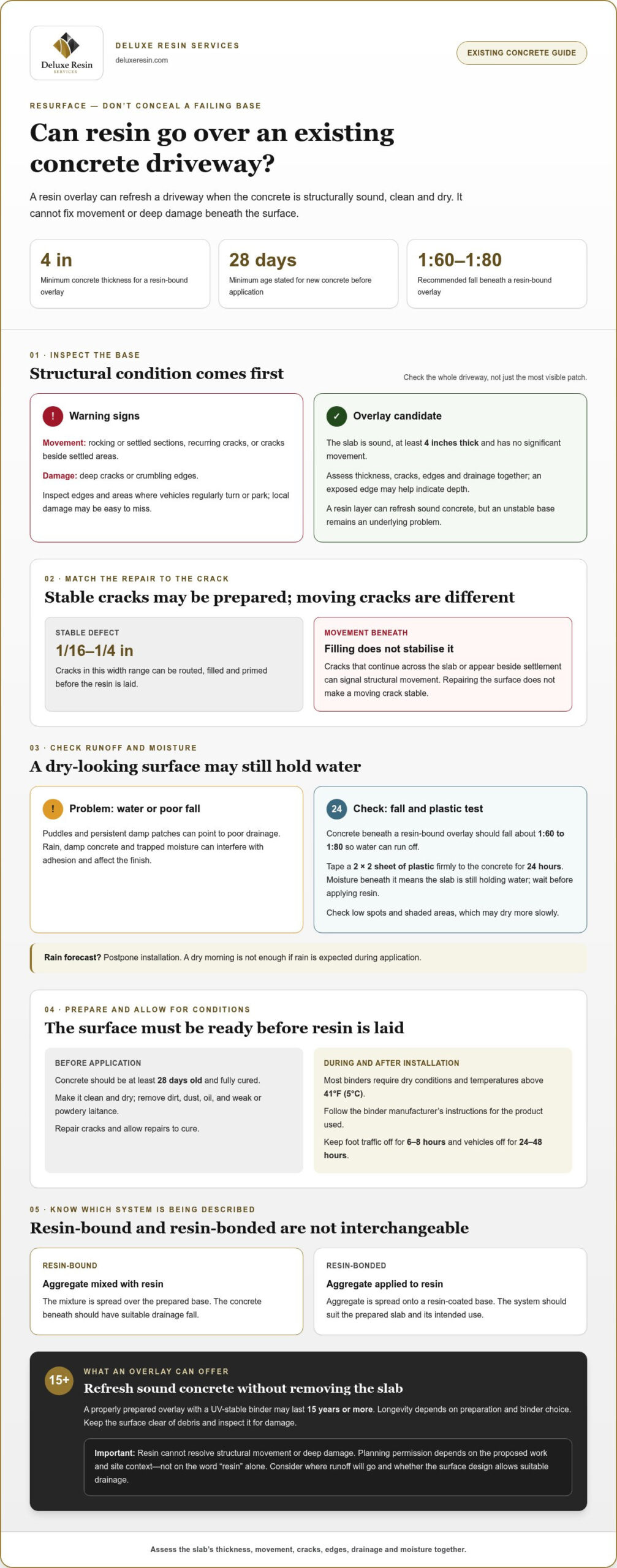
Replacing a concrete driveway with resin is suitable only if the existing slab is structurally sound. Look for movement, deep cracks and crumbling edges, which can indicate that an overlay would hide rather than fix a problem. Inspect the whole driveway, including its edges and the areas where vehicles regularly turn or park. A surface that looks intact in one spot may still have localised damage elsewhere.
Check the slab’s thickness as well as its visible condition. Concrete intended to support a resin-bound overlay should be at least 4 inches thick. If its depth is uncertain, an exposed edge may provide a useful indication, but assess the full slab rather than relying on one patch. Settlement, rocking sections or recurring cracks can point to movement beneath the surface, making the base unsuitable for a simple overlay.
Crack width helps distinguish stable defects from more serious damage. Hairline cracks and wider stable cracks need different preparation: cracks from 1/16 to 1/4 inch can be routed, filled and primed before resin is laid. This treatment does not make moving cracks stable. Note whether cracks continue across the slab or appear beside a settled area, as those patterns can signal structural movement.
Check drainage, too. The concrete beneath a resin-bound overlay should have a fall of about 1:60 to 1:80, allowing water to run off rather than collect. Puddles or persistent damp patches can reveal a poor gradient. Before deciding on an overlay, assess the slab’s thickness, movement, cracks, edges and drainage together.
Avoiding application when rain or moisture may affect the coating
Rain can disrupt resin application and affect the finished surface. If rain is expected, postpone installation. Water can interfere with adhesion, and dampness may affect the appearance. A surface that looks dry does not necessarily mean the concrete beneath is dry, particularly after wet weather or where water collects.
To check for moisture, tape a 2×2 sheet of plastic firmly to the concrete and leave it in place for 24 hours. Then inspect beneath it. Moisture trapped under the sheet indicates the slab is still holding water, so resin application should wait. Check low spots and shaded areas as well, since these may dry more slowly than exposed sections.
Temperature matters alongside rainfall. Most binders require dry conditions and temperatures above 41 deg F (5 deg C). In the UK, changing weather can make timing important: a dry morning is not enough if rain is forecast during application, or conditions fall below the required temperature. Follow the binder manufacturer’s instructions for the product being used.
Moisture can affect the bond between resin and concrete, and may leave the surface looking uneven. Applying resin over a damp slab can therefore undermine both performance and finish. Assess the forecast, slab condition and working temperature together, rather than treating any single dry spell as sufficient. For a clearer sense of the conditions involved, explore resin driveway application options.
Can I Use Resin on an Old or Existing Concrete Driveway?
An existing driveway can take resin if the concrete is sound, clean and dry. Proper preparation and drainage are essential for the overlay to bond and perform as intended.
Concrete preparation and resin installation
Preparation removes contaminants and weak surface material so resin can bond to the concrete. The slab should be at least 28 days old, fully cured, clean and dry before application. Remove dirt, dust, oil and weak or powdery laitance; repair cracks and let repairs cure. Apply resin according to the manufacturer’s instructions. Installation time depends on preparation and site conditions; keep foot traffic off for 6 to 8 hours and vehicles off for 24 to 48 hours.
Resin-bound and resin-bonded systems
Resin-bound surfacing mixes aggregate with resin before it is spread, while resin-bonded surfacing applies aggregate onto a resin-coated base. This difference affects the finish and how the aggregate is held in place. For an existing concrete driveway, the system needs to suit the prepared slab and its intended use. The terms are not interchangeable.
Resin and concrete trade-offs
A resin overlay can refresh sound concrete without removing the slab, but it won’t fix structural movement or deep damage. Its longevity depends on preparation and binder choice: a properly prepared overlay with a UV-stable binder may last 15 years or more. Keep the surface clear of debris and clean it as needed; inspect for damage so emerging issues can be addressed.
Planning permission and drainage rules
Planning permission cannot be determined from the word “resin” alone; the proposed work and site context matter. Drainage needs attention, too: the concrete beneath a resin-bound overlay should fall about 1:60 to 1:80. Consider where runoff will go and whether the surface design allows suitable drainage. For a driveway assessment and installation, explore resin driveway options.
Deluxe Resin Services: Domestic Resin Flooring
Deluxe Resin Services installs Resin Driveways for homeowners considering a resin finish over existing concrete. If the slab is sound and suitable, an overlay can refresh its appearance while retaining the base. If the concrete is moving, deeply cracked or crumbling, an overlay will not resolve the underlying issue. The slab’s condition should guide your next step.
Deluxe Resin Services also offers Sustainable Resin Solutions, formulated with up to 85% renewable, plant-based materials. This may suit homeowners weighing surface performance alongside material choices. Share details of your driveway’s condition and the finish you want, then discuss whether a resin driveway is appropriate for the project. Contact Deluxe Resin Services to discuss your driveway.
Plan your driveway’s next chapter
If you’re considering replacing a concrete driveway with resin, first decide what you want the finished entrance to achieve. Think about everyday use, the look you want beside your home, and whether retaining the existing base matters to your plans. Clear priorities make it easier to discuss a design that suits your property and practical needs.
Deluxe Resin Services offers Resin Driveways, alongside Domestic Resin Flooring and Industrial Resin Flooring. When you’re ready to discuss a driveway project, share what you’re hoping to change and what matters most in the finished surface. Contact Deluxe Resin Services to start a conversation and explore a considered way forward for your home.
Frequently Asked Questions
Can resin be laid over an existing concrete driveway in the UK?
Yes, resin can be laid over existing concrete in the UK if the slab is a suitable base. The surface needs preparation so the resin can bond, and the chosen system must suit the driveway’s use. For newly poured concrete, allow at least 28 days for curing before applying a resin-bound overlay. An older slab still needs assessment before work begins.
What condition must a concrete driveway be in before installing a resin-bound surface?
The driveway needs a stable base, without ongoing movement, deep cracks or crumbling edges. Its thickness and gradient matter too: a slab for a resin-bound overlay should be at least 4 inches thick, with a fall of about 1:60 to 1:80. Look at the whole area, including vehicle turning points and edges, where wear or settlement can be easier to spot.
What problems can occur when installing resin over concrete, such as cracks or poor drainage?
Movement-related cracks can reappear through an overlay, while moisture, oil or weak surface material can interfere with adhesion. Poor drainage can leave standing water, affecting the driveway’s use and finish. For example, a damp patch that remains after the surrounding concrete has dried may indicate water retention. Address the underlying cause before installation rather than relying on resin to conceal it.