

Could a handful of loose stones mean more than a cosmetic flaw? Loose aggregate, standing water and cracks can look like isolated surface defects, but their causes may lie in the resin mix, the base beneath it or the way water drains through the driveway. Understanding resin bound driveway problems and solutions starts with identifying what is behind the symptom, rather than covering it with a quick repair.
This practical UK guide explains what common problems look like, what may cause them and how to approach a suitable remedy. You’ll also find prevention steps to consider when planning a new or replacement driveway, from checking the base to planning for drainage and curing. Understanding the likely cause helps you make a more informed decision and reduces the risk of repeat issues.
Key Takeaways
- Use visible symptoms as clues, not a diagnosis, and understand how resin bound and resin bonded surfaces differ.
- Before installation, consider the base, drainage, materials, weather and planned access.
- Match the response to the likely cause instead of relying on a surface-level patch.
- Monitoring, local remediation or wider corrective work may be appropriate, depending on the assessment and system guidance.
Resin bound driveway problems: what common surface symptoms can tell you
A visible defect is a symptom, not a diagnosis. Resin bound surfacing is made by mixing aggregate with resin before laying, so the stones are held throughout the finished surface. Resin bonded surfacing is different: aggregate is scattered over a layer of resin, leaving loose stone at the surface. Knowing which type you have matters when interpreting wear or planning repairs.
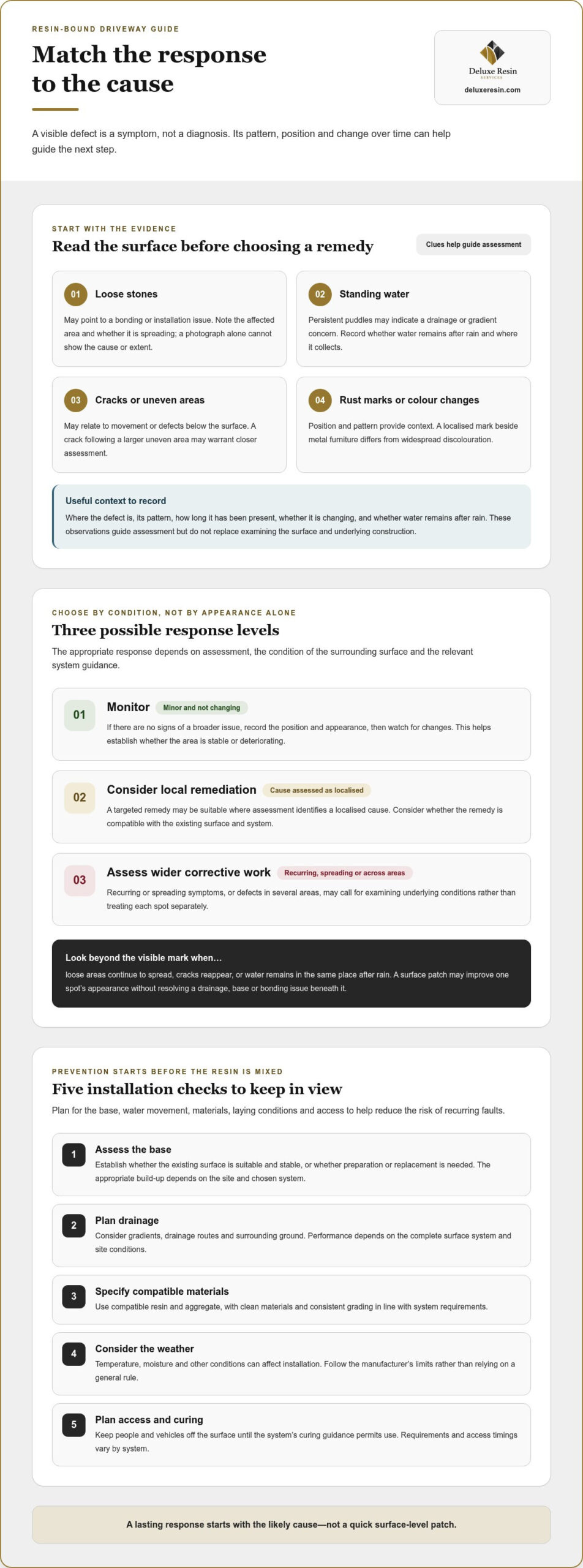
Loose stones, puddles, cracks, uneven patches, rust marks and colour changes are warning signs, not diagnoses. Each can have more than one possible cause. Look at the location and pattern of the defect, how long it has been there and whether it is changing. These details help you consider resin bound driveway problems and solutions without assuming every mark needs the same response.
How to read loose stones, puddles, cracks and colour changes
Loose aggregate may point to a bonding or installation issue, but a photograph alone can’t show why stones are lifting or how widespread the problem is. Note the affected area and check whether it is spreading. Persistent standing water may indicate a drainage or gradient concern. Resin bound surfacing is a form of permeable paving, but performance depends on the complete system and site conditions.
Cracks or uneven areas may relate to movement or defects below the surface. Rust marks and colour changes can have other explanations. Their position, pattern, age and recent history provide useful context. For example, a localised mark beside metal furniture is different from widespread discolouration. A crack that follows a larger uneven area may also warrant closer assessment. Record changes over time and note whether water remains after rain. These observations help guide an assessment, but they can’t replace examining the surface and its underlying construction.
How to prevent resin bound driveway problems before and during installation
Prevention starts before the resin is mixed. A sound plan considers the base, how water will move across and through the complete system, and the conditions for laying and curing. Use this checklist to keep key decisions in view:
- Assess the base. Establish whether the existing surface is suitable and stable, or whether preparation or replacement is needed. The appropriate build-up depends on the site and chosen system.
- Plan drainage. Consider gradients, drainage routes and the surrounding ground. For front gardens, consult the relevant Permeable Surfacing of Front Gardens: Guidance. The suitability of a design depends on the complete surface system and site.
- Specify materials. Use compatible resin and aggregate, with clean materials and consistent grading in line with system requirements.
- Consider the weather. Temperature, moisture and other conditions can affect installation. Follow the manufacturer’s limits rather than relying on a general rule.
- Plan access. Keep people and vehicles off the surface until the system’s curing guidance permits use.
Which installation conditions help reduce common driveway faults?
Preparation should suit the actual base, rather than assume one build-up works for every driveway. Drainage matters too: water that cannot pass through or run off as intended may remain on the surface. Careful, consistent mixing helps distribute resin through the aggregate. Contamination, incorrect proportions or rushed laying can affect the finished result.
Installation and curing requirements vary by system, so follow the manufacturer’s guidance for technical details and access timings. Deluxe Resin Services installs resin driveways on a project basis, with preparation and workmanship central to the finished surface. For more project context, see our resin bound driveway installation guide. Careful planning helps reduce the risk of recurring faults. If you’re considering a new or replacement driveway, read more about resin driveway projects.
Resin bound driveway solutions: address the cause, not just the surface
A lasting response begins with understanding why the fault has appeared. A small, stable blemish may call for observation, while a recurring defect or standing water may point to a wider issue. A surface-level patch can improve the appearance of one spot, but it won’t necessarily resolve a problem with drainage, the base or bonding beneath the affected area. The right approach depends on assessing the surface and following the relevant system guidance.
- Monitor: If a minor symptom is not changing and there are no signs of a broader issue, record its position and appearance, then watch for changes. This helps establish whether the area is stable or deteriorating.
- Consider local remediation: Where an assessment identifies a localised cause, a targeted remedy may be suitable. Consider its compatibility with the existing surface and system.
- Assess wider corrective work: Recurring or spreading symptoms, or defects across several areas, may call for an examination of underlying conditions rather than separate treatments for each spot.
When does a driveway fault need a wider assessment?
Pay attention to changes over time. Loose areas that continue to spread, cracks that reappear or water that remains in the same place after rain are reasons to look beyond the visible mark. A suitable solution should reflect the diagnosed cause, the condition of the surrounding surface and the system manufacturer’s guidance. Without that context, even a neat-looking patch could leave the underlying problem untouched.
For general upkeep context, our resin floor maintenance guide covers care principles, though routine maintenance isn’t a substitute for assessing a driveway fault. The cause helps determine whether monitoring, local work or broader correction is the appropriate response to resin bound driveway problems and solutions. For a new or replacement surface, explore the project information on our website.
Plan a driveway that’s ready for the years ahead
Use what you’ve learnt about resin bound driveway problems and solutions to make your next decision with care. If a surface is deteriorating, understanding its history and the extent of the issue can help you decide whether replacement is a suitable next step. A new installation is also an opportunity to prioritise preparation and choose a finish that complements your property.
Deluxe Resin Services provides project-based resin driveway installation, with a focus on quality craftsmanship and low-maintenance surfacing. A considered approach recognises that each site has its own requirements. Discuss your new or replacement resin bound driveway project with Deluxe Resin Services.
Frequently Asked Questions
Can loose stones on a resin bound driveway be repaired?
Sometimes. If the damage is local and the surrounding surface remains sound, a compatible repair may be possible. Suitability depends on the cause and the resin bound system, so don’t simply sweep loose stones back into place or use household adhesive. Note whether the affected patch grows after vehicle use or changes in the weather. This can help distinguish an isolated defect from continuing deterioration.
Why is water pooling on my resin bound driveway?
Pooling may reflect an issue with the finished gradient, the permeable layers beneath, or surface contamination that restricts water movement. Appearance alone can’t confirm the cause. Observe whether the water clears as rain eases and whether the same low spot remains in dry conditions. This record can help distinguish temporary wetness from a persistent concern when considering resin bound driveway problems and solutions.
Can a cracked resin bound driveway be resurfaced?
Possibly, but resurfacing isn’t automatically the right fix. A fine mark in a stable area differs from a crack that widens, returns or follows an uneven section. Before adding a new layer, consider the existing surface, underlying support, drainage and finished levels. Covering a moving crack may leave its cause in place and affect the new finish.
How can I prevent discolouration on a resin bound driveway?
Where appropriate, a system using UV-stable resin can help reduce fading from sunlight. Follow its care guidance for cleaning. Colour changes can also result from staining or natural variation in the aggregate. Compare affected areas with sheltered sections and note when the change appeared. Avoid unapproved cleaners, which may alter the finish rather than address the cause.