

A coating label alone can’t tell you whether a floor will remain suitable when water, oils or cleaning residues are present. Choosing a slip resistant commercial floor coating means looking beyond the product description and considering how each area is used.
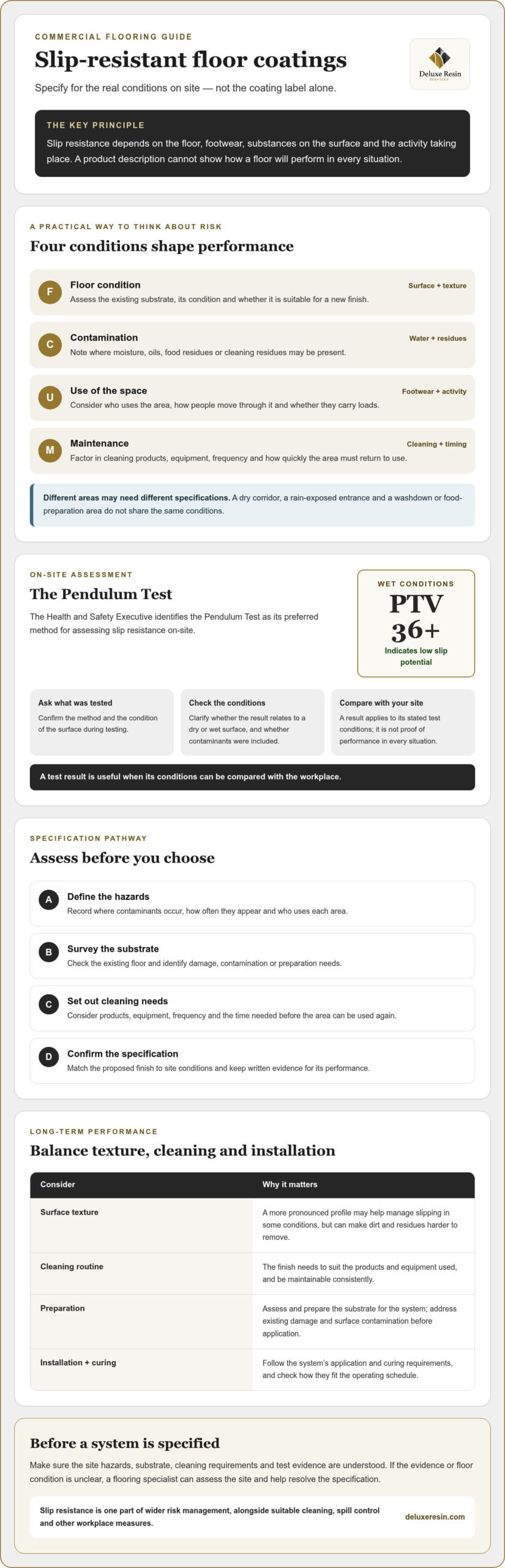
You need a surface that helps manage slipping risk without becoming difficult to clean or disrupting daily operations. Performance depends on factors such as contamination, footwear, surface texture and maintenance, so the right specification is site-specific. The Health and Safety Executive identifies the Pendulum Test as its preferred method for assessing slip resistance on-site, with a PTV of 36 or above indicating low slip potential in wet conditions. This guide explains what affects performance, which testing and installation questions to ask, and how cleaning can influence a floor over time. It also covers when to ask a resin flooring specialist to assess the site before a system is specified.
Key Takeaways
- Specify a slip resistant commercial floor coating around the site’s real hazards and activities, not the product label alone.
- Before choosing a system, identify contamination risks, assess the existing substrate and set out cleaning requirements.
- Ask which test method and conditions support any stated slip-resistance result, and compare them with your workplace.
- Balance surface texture with cleanability, and confirm preparation, installation and curing requirements before work begins.
What does slip resistant commercial floor coating mean in practice?
A slip resistant commercial floor coating is a floor finish specified to help manage slipping risk in the environment where it will be used. Its surface may include texture, but the coating label alone cannot show how it will perform in every situation. Slip resistance depends on the floor, footwear and substances on the surface, as well as the activity taking place.
Testing can help assess this interaction under defined conditions. For background on the methods and principles involved, see Floor slip resistance testing. Consider any test result alongside the conditions in which it was measured. It is not a guarantee of performance across an entire site.
No coating can guarantee safety on its own. Surface specification is one part of wider risk management, alongside suitable cleaning, spill control and other measures appropriate to the workplace. If you are also reviewing broader premises accessibility and safe movement between storeys, you can discover ElevatedStairlifts for professional mobility and lift options.
Which site conditions can change slip risk?
A dry corridor with steady foot traffic may need a different specification from an entrance where rainwater is brought indoors. Washdown areas are regularly exposed to water and cleaning residues, while food-preparation spaces may encounter oils or food residues. These substances can change how footwear contacts the floor.
Cleaning routines matter too. Residue from unsuitable products or delayed removal of contamination can affect underfoot conditions. When assessing an area, note the likely contaminants, the footwear people use, how often the floor is cleaned and how people move through the space. Pay particular attention to busy routes, turning points and areas where people carry loads.
Slip risk is shaped by both the floor’s condition and the way people use the space. Assessing these factors together helps you specify a practical surface, rather than choosing a texture by appearance alone.
How should you assess and specify slip-resistant commercial floor coating?
Work through the site requirements before choosing a slip resistant commercial floor coating. Assess each area separately if its use or exposure differs from the rest of the building:
- Define the hazards: Record where moisture or other contaminants occur, how often they appear and who uses each area.
- Survey the substrate: Check the existing floor’s condition and whether it is suitable for a new finish.
- Set out cleaning needs: Consider the products, equipment and frequency involved, and how quickly the area needs to return to use.
- Confirm the specification: Match the proposed finish to those conditions and document the evidence supporting its performance.
Check current UK guidance and any requirements relevant to your workplace. The HSE guidance on assessing slip resistance explains assessment approaches, including the Pendulum Test. Ask the flooring specialist which method supports a stated result and whether its test conditions are relevant to the floor’s expected use.
What should a slip-resistance test or specification tell you?
Ask for the test method, the surface condition during testing and written evidence for the product or system being considered. Clarify whether the result relates to a dry or wet surface and whether contaminants were included. A result describes performance under stated conditions. It should not be treated as universal proof that a floor will be safe in every situation.
A slip-test result is useful only when you can compare its test conditions with those on your site. If the evidence or substrate condition is unclear, a professional assessment can help resolve the specification before installation. You can learn more about commercial and industrial resin flooring as part of that discussion.
How do coating texture, cleaning and installation affect long-term performance?
Surface texture involves a balance, not a simple measure of safety. A more pronounced profile may help manage slipping in some conditions, but it can also make dirt and residues harder to remove. Consider how the floor will be cleaned in practice, including the equipment and products used, and whether the chosen finish can be maintained consistently. The UK Slip Resistance Group guidelines offer useful context on slip resistance and ongoing floor care.
Preparation matters as much as the coating itself. The substrate should be assessed and prepared to suit the system, with existing damage and surface contamination addressed before application. Correct installation and appropriate curing help the finish develop as intended. Follow the system’s specified application and curing requirements, and check how they fit the site’s operating schedule before work begins.
When reviewing performance expectations and aftercare, ask for clear information on the system’s maintenance requirements and suitability for the conditions identified in your assessment. This helps you plan for daily use rather than focusing only on the initial finish.
When should a commercial resin flooring specialist assess the site?
Ask for a professional assessment if contaminants vary, traffic is heavy, the existing floor is damaged or the cleaning regime is complex. An installer can review how the space is used, the substrate’s condition and practical constraints such as access and operating schedules before recommending a system. Coating selection is one part of the process, not a complete assessment of site safety. The specification should sit within the site’s wider risk-management approach.
Specify a floor that fits the way your site works
A suitable slip resistant commercial floor coating starts with the conditions on site, not the product label alone. Identify contaminants, traffic and cleaning routines, then weigh the required surface texture against ease of maintenance. Test results are most useful when you know the method and conditions behind them. Preparation, installation and curing also contribute to the finished floor’s performance.
If site use is complex or the existing substrate needs careful assessment, specialist input can help shape a practical specification. Deluxe Resin Services installs commercial and industrial resin flooring, including seamless floors described as durable and non-slip.
Discuss a commercial resin flooring project with Deluxe Resin Services and take the next step towards a floor designed around your site’s needs.
Frequently Asked Questions
Is slip-resistant commercial floor coating suitable for every workplace?
No. A single coating or surface profile will not suit every workplace. The right choice depends on how the area is used, the contaminants present, footwear, traffic and cleaning routines. A dry office corridor has different demands from a washdown area. Assess each space individually and check that the proposed system suits its substrate and operational requirements.
Can a resin floor become slippery when wet or contaminated?
Yes. Water, oils, food residues or cleaning-product deposits can change how footwear grips a resin floor. Even a finish described as non-slip should not be treated as protection against every contaminant or condition. Manage spills and cleaning residues promptly, and consider how the floor will perform in the conditions it actually faces rather than relying on its description alone.
How is slip resistance checked on a commercial floor?
Slip resistance can be assessed using recognised testing methods, including the Pendulum Test, which produces a Pendulum Test Value (PTV). The Health and Safety Executive’s guidance can help explain the method and how results are interpreted. Ask which test was used, what surface conditions applied and whether the evidence relates to the specific floor system being considered.
Does a more textured floor coating make cleaning harder?
It can. Texture may help manage slipping risk in some environments, but deeper surface profiles can trap dirt or residues and need more attention during cleaning. The practical choice depends on the contaminants, cleaning equipment and routine. Discuss these factors before specifying the finish, and confirm that the maintenance method is suitable for the resin system.